Creator Business
Mar 2, 2026
Why More Content Does Not Mean More Money.... And what actually drives creator income
Think posting more content guarantees higher income? Discover why more content does not mean more money and what creators should focus on to build scalable, consistent revenue instead.
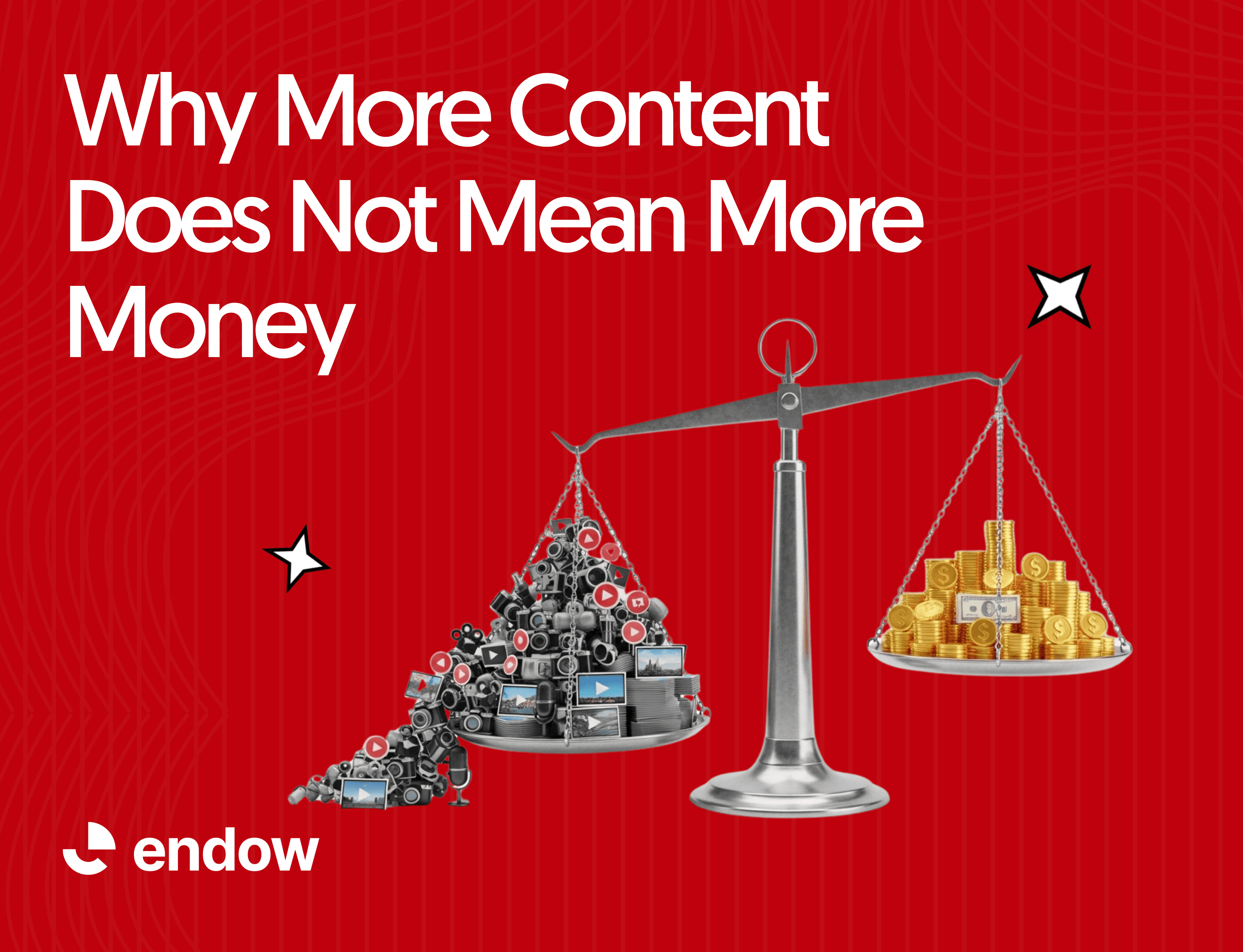
There is a quiet lie circulating in the creator economy.
Post more.
Grow faster.
Earn more.
So creators push harder.
More reels.
More threads.
More carousels.
More livestreams.
And yet, income stays flat.
The truth is uncomfortable but freeing.
More content does not automatically mean more money.
If anything, creating endlessly without structure can slow down your revenue growth.
Let’s break down why.
The Attention Trap
Platforms reward visibility.
Algorithms reward consistency.
So it feels logical to assume that more output equals more income.
But social platforms reward attention.
Businesses reward transactions.
These are not the same thing.
You can:
Get 100,000 views
Gain 2,000 followers
Receive 500 comments
And still make zero sales.
Because attention is only the first step. Monetization requires systems.
Content Is Traffic, Not Income
Content has one main job.
Drive people somewhere.
If your content is not connected to:
A digital product
A storefront
A paid offer
An email list
A structured service
Then you are building visibility, not revenue.
Visibility without a monetization path becomes exhausting.
That is why some creators with smaller audiences earn more than creators with massive reach.
They built conversion systems.

The Hidden Cost of Over-Creation
When you create constantly, three things happen:
You spend most of your time producing.
You neglect optimization.
You delay building scalable assets.
Let’s look at each.
1. Production Takes All Your Energy
Filming, editing, writing, designing.
It consumes mental bandwidth.
If all your time goes into creating new posts, you never pause to ask:
Is this content converting?
Which offers are performing?
Where are buyers coming from?
How can I increase average order value?
Without reflection, you stay busy but stagnant.
2. You Ignore Monetization Strategy
Creators often say:
“I need to grow more before I monetize.”
But growth without structure just creates a bigger unpaid audience.
Monetization requires:
Clear offers
Defined pricing
Structured product pages
Checkout systems
Follow-up emails
Conversion tracking
These are business tasks.
They require time.
If you are always creating, you never build them.
3. You Delay Building Assets
There are two types of content:
Ephemeral content
Assets
Ephemeral content:
Daily posts
Stories
Short-term trends
Assets:
Digital products
Templates
Courses
Memberships
Structured storefronts
Evergreen email funnels
Assets compound.
Posts fade.
If you spend 30 hours creating weekly content but zero hours building products, your income stays dependent on constant output.
That is not scalable.

Why Some Creators Earn More With Less Content
High-earning creators usually do three things differently.
They Optimize Instead of Multiply
Instead of posting five random pieces of content, they:
Analyze what converts
Double down on high-performing topics
Improve their sales page
Add upsells
Bundle products
Optimization increases revenue without increasing workload.
They Build Systems
Systems turn attention into income.
For example:
Content → Storefront → Checkout → Automated delivery → Follow-up email → Upsell
Once that system is built, each post works harder.
Without a system, each post starts from zero.
They Focus on Buyer Behavior
Not all followers are buyers.
Creators who earn consistently understand:
What problem their audience pays to solve
What price point works
What messaging converts
What objections stop purchases
That insight comes from tracking revenue data, not from chasing engagement.
The Real Revenue Equation
More accurate formula:
Clear Offer × Targeted Traffic × Conversion System = Income
Not:
More Content = More Money
You need:
A valuable product
An audience that needs it
A frictionless payment process
Trust
Clear positioning
Content supports this.
It does not replace it.
When More Content Actually Works
There are moments when increasing content volume helps.
For example:
Testing new positioning
Entering a new niche
Launch periods
Building awareness from scratch
But even then, content should lead somewhere specific.
If you are posting daily without:
A call to action
A product link
A free lead magnet
A storefront
You are growing attention without direction.
The Burnout Problem
Over-creation leads to burnout faster than poor sales.
Why?
Because you feel productive but not rewarded.
You are working harder but not earning more.
This creates frustration, comparison, and eventually exhaustion.
Sustainable income reduces burnout.
Endless posting increases it.

What To Focus On Instead
If you want revenue growth, shift your time allocation.
Instead of spending 80 percent of your time creating and 20 percent monetizing, try:
50 percent creating
30 percent optimizing offers
20 percent building systems
That could include:
Improving product descriptions
Testing new pricing
Adding bundles
Tracking conversion rates
Improving your checkout flow
Building an email sequence
These activities compound.
Build Once, Earn Repeatedly
Let’s say you spend:
10 hours creating 10 posts.
Those posts may perform well for a few days.
Now imagine spending:
10 hours building a premium digital template and listing it in your storefront.
If that product sells consistently, it earns long after the 10 hours are gone.
That is leverage.
Leverage, not volume, builds wealth.
Why a Structured Storefront Changes Everything
When your content points to a structured storefront:
Sales tracking becomes easier
Revenue sources become clearer
Conversion rates become measurable
Optimization becomes possible
Without structure, you cannot track what is working.
Without tracking, you cannot improve.
When your monetization lives inside a dedicated system, each piece of content becomes intentional.
Not just noise.
Ask Yourself These Questions
Instead of asking:
“How can I post more?”
Ask:
How can I improve my conversion rate?
How can I increase my average order value?
How can I build a product ecosystem?
How can I automate delivery?
How can I turn buyers into repeat customers?
These questions grow income faster than posting another reel.
The Shift From Creator to Business Owner
Posting more is a creator mindset.
Optimizing revenue is a business mindset.
As you grow, you must evolve.
Your time should increasingly go toward:
Product development
Revenue analysis
Customer experience
Pricing strategy
Retention systems
Content becomes the amplifier, not the foundation.
Final Thoughts
More content can grow your audience.
But only structure grows your income.
If you feel stuck financially, the solution is rarely to post more.
It is to:
Build stronger offers
Improve your storefront
Track performance
Optimize conversions
Create assets that sell repeatedly
When your systems are strong, even fewer posts can drive more revenue.
That is the difference between being busy and being profitable.
And once you understand that shift, you stop chasing volume and start building leverage.
Related Content


