Money Made Simple
Mar 3, 2026
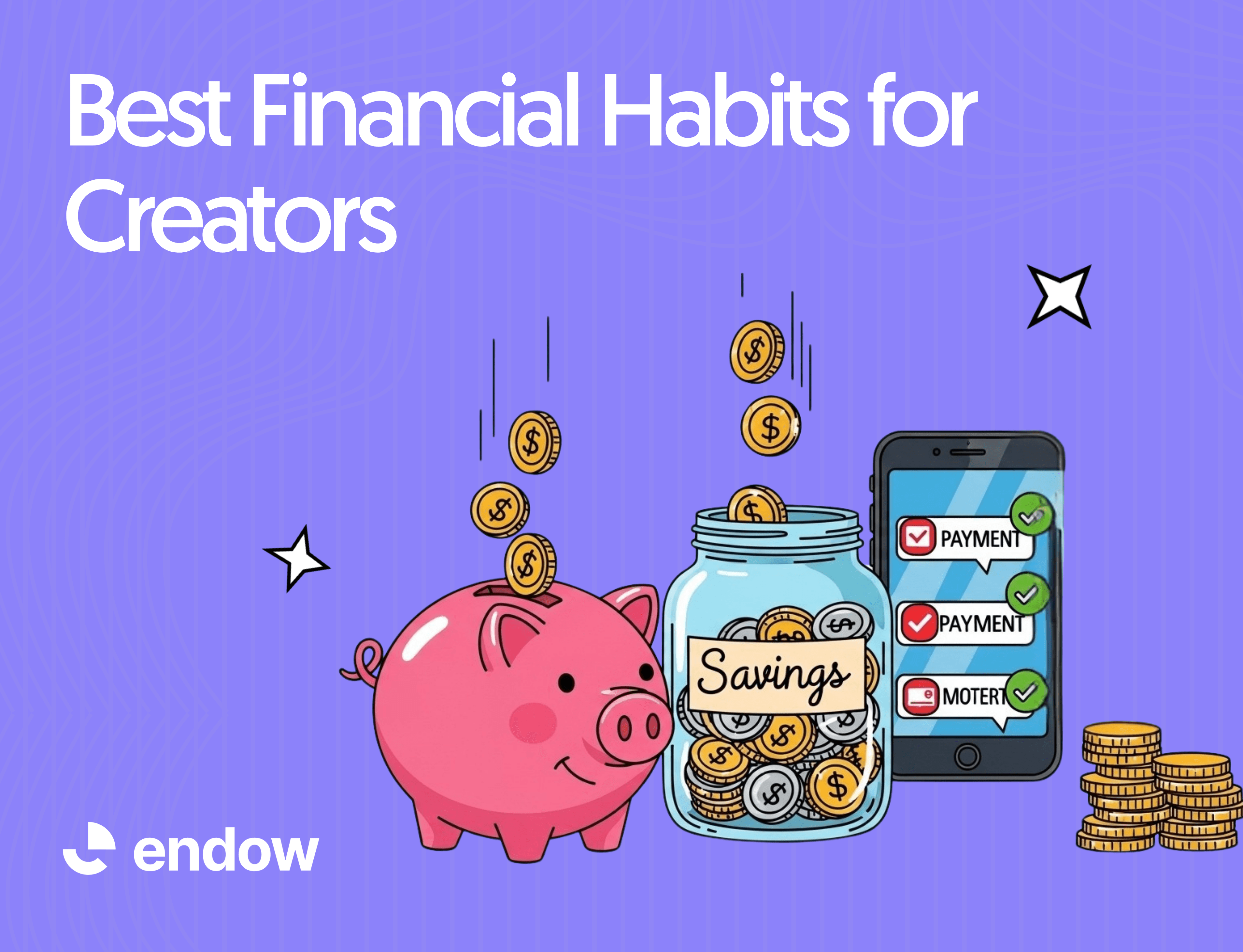
Best Financial Habits for Creators
If you want creative freedom long term, these are the financial habits that matter.
The creator economy rewards visibility.
But it sustains structure.
Across Africa and globally, more creators are earning real money, brand partnerships, digital products, subscriptions, consulting, licensing, affiliate commissions. The opportunities are expanding.
Yet many creators still feel financially unstable.
Income comes in waves.
Expenses creep up silently.
Taxes become urgent suddenly.
Savings feel inconsistent.
The problem is rarely talent.
It is habits.
Not motivational habits. Not aesthetic productivity rituals. Real financial habits. The kind that shape behavior monthly, quarterly, yearly.
If you want creative freedom long term, these are the financial habits that matter.
1. Treat Your Creative Work Like a Business From Day One
One of the most dangerous myths in the creator economy is this:
“I’ll get serious about money when I start earning more.”
That thinking delays structure.
Even if you earn irregularly, treat your creative output as a business.
That means:
Tracking income from the first payment
Keeping digital records of invoices
Separating client conversations from personal chats
Saving transaction confirmations
Naming files properly
Recording agreements in writing
Professional behavior attracts professional opportunities.
Financial discipline is not something you switch on when revenue grows. It is something that allows revenue to grow safely.
2. Open a Separate Business Account
This is non-negotiable.
The moment you begin earning consistently, even modestly, separate business and personal money.
Why?
Because mixing funds creates confusion.
When your rent, subscriptions, groceries, and brand payments share the same account, you cannot measure:
True business performance
True personal spending
Real profitability
A dedicated business account allows you to:
See business cash flow clearly
Identify spending patterns
Allocate taxes correctly
Avoid accidental overspending
This is one of the simplest habits with the highest long-term impact.
Clarity reduces stress.
3. Build the Habit of Immediate Allocation
When money enters your account, it should not sit undefined.
Adopt an allocation system.
For example:
50 percent operational use
20 percent tax reserve
20 percent savings
10 percent reinvestment
The percentages will vary depending on your income level and obligations. The principle remains the same.
Do not wait until month-end to decide what to save.
Allocate immediately.
Delayed decisions often become emotional decisions.
4. Track Income by Source, Not Just Total
Many creators track revenue loosely.
“I made about this much last month.”
That is not enough.
Track income by category:
Brand deals
Product sales
Affiliate commissions
Subscriptions
Services
Licensing
Ad revenue
Why this matters:
If 70 percent of your income comes from one source, you are vulnerable.
If product sales outperform brand deals, that signals where to focus.
Tracking by source reveals patterns you would otherwise miss.
Growth becomes strategic instead of reactive.
5. Build a 6-Month Safety Net
Creative income fluctuates.
Brands pause campaigns.
Launches underperform.
Platforms shift algorithms.
Economic conditions tighten.
Without savings, every slow period feels like a crisis.
Your safety buffer should ideally cover:
Living expenses
Core business tools
Essential subscriptions
Internet and utilities
Minimum operational costs
Building this buffer takes time.
Start small.
Consistency matters more than size.
Financial security is not built in one large deposit. It is built in repeated discipline.
6. Schedule Monthly Financial Reviews
You check engagement metrics regularly.
Treat finances the same way.
Set a recurring monthly date for review.
During this session, analyze:
Total revenue
Revenue by stream
Expenses
Profit
Cash reserves
Outstanding invoices
Subscription renewals
Ask practical questions:
What increased this month?
What decreased?
Are expenses creeping up?
Which stream is unstable?
Is savings growing?
Without review, bad habits compound silently.
With review, small corrections prevent big problems.
7. Track Profit, Not Just Revenue
Revenue looks impressive.
Profit determines sustainability.
If you earn ₦3 million in a month but spend ₦2.7 million on ads, tools, lifestyle upgrades, and production costs, your margin is fragile.
Profit gives you room to breathe.
Make it a habit to calculate:
Revenue minus expenses equals profit.
Then ask:
Is this margin healthy?
Can I maintain this long term?
Creators who focus only on revenue often overextend themselves.
Creators who track profit build stability.
8. Avoid Lifestyle Inflation
As income increases, lifestyle upgrades often follow.
Better devices.
Premium subscriptions.
Luxury workspaces.
More travel.
Higher rent.
Growth is not the problem.
Uncontrolled growth is.
Before increasing personal spending, ask:
Is this sustainable if my income drops by 30 percent?
Is this investment productive or purely emotional?
Does this align with my long-term vision?
Financial maturity shows when your income grows faster than your expenses.
9. Build Recurring Revenue Intentionally
One-time payments create volatility.
Recurring income creates stability.
Consider building:
Subscription communities
Monthly membership programs
Retainer-based services
Ongoing coaching programs
Digital product bundles
Recurring revenue smooths out income swings.
Even a modest recurring base reduces financial pressure.
When you know a baseline amount is coming in monthly, decision-making improves dramatically.
10. Diversify Across Platforms and Streams
Overdependence is risky.
If 90 percent of your income depends on:
One platform
One brand
One product
One algorithm
You are exposed.
Diversify gradually.
Add:
Direct-to-audience products
Affiliate streams
Licensing opportunities
Email list monetization
Workshops
Diversification is protection.
11. Automate Where Possible
Manual systems increase error and stress.
Automate:
Payment confirmations
Product delivery
Subscription billing
Revenue tracking
Expense categorization
Automation reduces friction.
When your financial system runs smoothly, you free up energy for creative work.
Structure supports creativity.
12. Maintain Documentation Discipline
Keep organized digital records of:
Contracts
Invoices
Payment confirmations
Expense receipts
Brand agreements
Licensing terms
Use consistent naming systems.
Store backups.
Why this matters:
Disputes happen.
Taxes require records.
Investors request documentation.
Partnerships demand proof of performance.
Disorganization creates vulnerability.
Documentation builds credibility.
13. Plan in 3-Year Cycles
Most creators think month to month.
Shift your thinking.
Ask:
Where do I want my income to be in three years?
What revenue mix do I want?
How much recurring income should I have?
What margin feels safe?
Then reverse engineer.
If you want ₦20 million annually in three years, what needs to happen this year?
Long-term thinking stabilizes short-term decisions.
14. Separate Emotional Decisions From Financial Decisions
Creative work is emotional.
Money should not be.
Before accepting a low-paying brand deal for exposure, ask:
Does this align with my positioning?
Is this strategic or reactive?
Before investing heavily in equipment, ask:
Will this generate measurable return?
Emotion-driven financial decisions create instability.
Data-driven decisions build longevity.
15. Track Your Net Worth Annually
Income matters.
Savings matter.
Assets matter.
Debt matters.
Your net worth is the full picture.
Once a year, calculate:
Assets minus liabilities.
Even if the number feels small, tracking it builds awareness.
Wealth is built gradually.
Measuring progress reinforces discipline.
16. Invest Beyond the Creator Economy
Creators often reinvest only into content.
Consider broader financial growth:
Long-term investments
Retirement planning
Diversified asset classes
Education funds
Property goals
Creative income can be volatile.
External investments create stability beyond platforms.
17. Centralize Your Financial Data
Fragmentation creates confusion.
Multiple apps.
Multiple dashboards.
Multiple payment links.
Centralizing your income and expense tracking allows you to:
See patterns clearly
Measure growth trends
Identify leaks
Plan with confidence
When everything is scattered, stress increases.
When everything is visible, confidence grows.
The Truth About Financial Freedom as a Creator
Financial freedom does not come from one viral moment.
It comes from repeated discipline.
Small habits repeated monthly compound over years.
The creator who:
Saves consistently
Reviews monthly
Tracks profit
Diversifies income
Avoids lifestyle inflation
Builds reserves
Documents properly
Will outlast the one who relies solely on momentum.
The goal is not just income.
It is sustainability.
Not just growth.
But stability with growth.
Final Reflection
Creativity opens doors.
Habits keep them open.
The creator economy in Africa and globally will continue to expand. New platforms will emerge. New monetization models will appear.
But the principles of financial stability will not change.
Track consistently.
Save intentionally.
Review monthly.
Diversify strategically.
Plan long term.
Protect your margins.
Financial habits are not glamorous.
They are powerful.
And when your money is structured, your creativity becomes fearless.
That is where real freedom begins.
Related Content