Money Made Simple
Mar 23, 2026
The Psychology of Spending as a Digital Creator
Because before money becomes a system, it is behavior. And behavior is shaped by pressure, identity, fear, and environment.
There’s a quiet contradiction at the center of the creator economy.
Creators are earning more than ever.
More platforms.
More monetization paths.
More visibility.
And yet, many creators feel stuck financially.
Not because they aren’t making money.
But because they don’t fully understand how they spend it, why they spend it, and what their money is actually doing.
This is not a budgeting problem.
It is a psychology problem.
Because before money becomes a system, it is behavior.
And behavior is shaped by pressure, identity, fear, and environment.
If you don’t understand the psychology behind your spending, no financial tool, no income level, and no opportunity will fix the underlying pattern.
This article breaks that down.
Not with surface-level advice.
But by unpacking how spending actually works for digital creators, and how to rebuild it into something sustainable.
The Creator Economy Is Built on Visible Success
Traditional careers hide money.
You don’t see your colleague’s salary.
You don’t see their bank account.
You don’t see their financial decisions.
But in the creator economy, money is often visible or implied.
The car in the video
The travel content
The fashion
The lifestyle
The “soft life” narrative
Even when it is not real, it feels real.
This creates a powerful psychological effect:
👉 You are constantly comparing your internal reality to someone else’s external highlight.
And that comparison quietly shapes spending decisions.
You don’t just spend based on need.
You spend based on:
Perception
Identity
Positioning
Because in many cases, your lifestyle becomes part of your brand.
Spending Is Not Just Consumption, It Is Signaling
For most creators, money is not just used.
It is performed.
A purchase is rarely just a purchase.
It is often a signal.
“I’ve made it”
“I belong in this space”
“I am growing”
“I am successful”
This is where traditional financial advice breaks.
Because it assumes spending is rational.
For creators, spending is often strategic, emotional, and performative at the same time.
The Content Justification Loop
This is one of the most common patterns.
A creator buys something expensive and justifies it by saying:
👉 “It’s for content”
And sometimes, that’s true.
But often, it sits in a gray area.
Clothes worn both on and off camera
Travel that mixes business and leisure
Gadgets that are partially necessary
This creates a dangerous loop:
Spend money
Justify it as content
Hope it generates returns
Repeat
Over time, spending becomes pre-emptive, not strategic.
You spend before you earn.
And that breaks financial stability.
The Irregular Income Effect
A creator’s income is not stable.
It comes in waves.
High months
Low months
Unexpected payouts
Delayed payments
This irregularity has a deep psychological impact.
The “I Might Not Earn Tomorrow” Effect
When income feels uncertain, spending becomes reactive.
Two extremes appear:
1. Overspending During High Months
When money comes in:
👉 You feel relief
👉 You feel rewarded
👉 You feel urgency to enjoy it
Because subconsciously:
👉 “What if this doesn’t happen again?”
So you spend quickly.
Not because you are irresponsible.
But because your brain is trying to secure emotional satisfaction before uncertainty returns.
2. Underspending or Hoarding
Some creators swing the other way.
They become overly cautious.
Avoid investing
Avoid spending on tools
Hold too much cash
Because they fear losing stability.
Both extremes are reactions to the same root:
👉 Uncertainty
Lifestyle Inflation Happens Faster for Creators
Lifestyle inflation is when your spending increases as your income increases.
But for creators, it happens faster.
Why?
Because growth in the creator economy is often:
Sudden
Visible
Public
The Identity Upgrade
When income increases, creators don’t just upgrade spending.
They upgrade identity.
New environments
New social circles
New expectations
Suddenly:
You’re around people who spend more
You’re exposed to higher standards
Your baseline shifts
What used to feel like luxury now feels normal.
And spending adjusts to match that new normal.
The Problem With Fast Growth
When identity grows faster than financial systems:
👉 Spending expands without structure
So even when income increases:
👉 Financial stability does not improve
This is why some creators:
Earn more
But feel the same financial pressure

The Emotional Triggers Behind Spending
Most spending decisions are not logical.
They are emotional.
For creators, certain triggers are more pronounced.
1. Validation Spending
Spending to feel recognized.
Buying things to “look successful”
Matching perceived industry standards
This often happens after:
Big deals
Recognition
Public milestones
2. Stress Spending
When work becomes overwhelming:
👉 Spending becomes relief
Ordering food frequently
Impulsive purchases
“I deserve this” mindset
This is not about money.
It is about emotional regulation.
3. Reward Spending
Creators work without traditional structure.
No fixed salary.
No clear milestones.
So they create their own rewards.
“I hit 10k followers, let me celebrate”
“I closed a deal, I deserve something”
This builds a habit where:
👉 Every win is tied to spending
4. Fear-Based Spending
Sometimes spending is driven by fear.
Buying tools you don’t need
Paying for platforms you don’t use
Investing in trends too early
Because:
👉 “What if I miss out?”
The Hidden Pressure of “Looking Successful”
There is an unspoken expectation in the creator economy:
👉 You must look like you are winning
Even when you are still figuring things out.
This creates pressure to:
Upgrade aesthetics
Upgrade lifestyle
Upgrade output
Before your finances are ready.
The Cost of Perception
Maintaining an image is expensive.
And often:
👉 It is funded by unstable income
This leads to:
High expenses
Low savings
Financial anxiety
Even when revenue is strong.
Why Creators Struggle to Track Spending
Tracking spending sounds simple.
But psychologically, many creators avoid it.
Avoidance Behavior
When you don’t track money:
👉 You don’t have to confront reality
This is common when:
Income is irregular
Spending is inconsistent
Numbers feel overwhelming
Fragmented Income = Fragmented Awareness
Creators earn from:
Multiple platforms
Different currencies
Various payment methods
Without a system:
👉 You don’t see the full picture
And when you can’t see clearly:
👉 You can’t control effectively
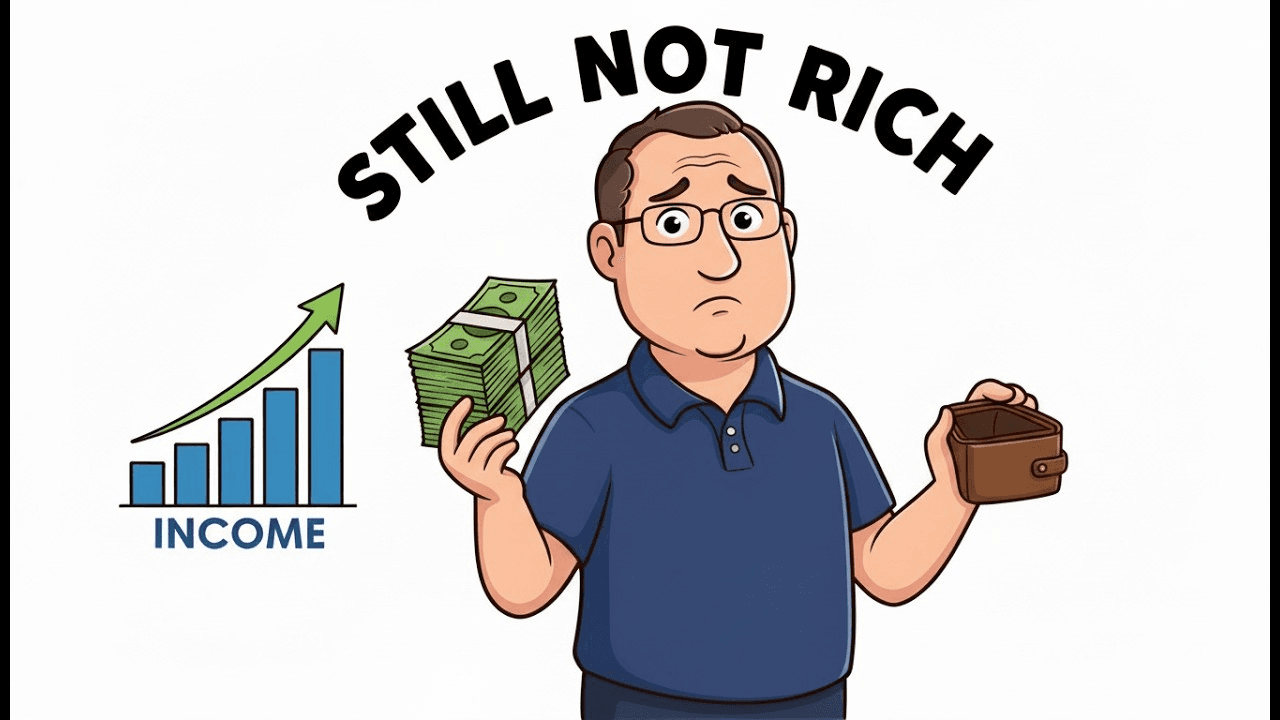
The Disconnect Between Earning and Feeling Wealthy
One of the most confusing experiences for creators is this:
👉 “I make money, but I don’t feel rich”
This happens because:
Income is visible
Expenses are invisible
Systems are missing
So money flows through your life without structure.
Rebuilding a Healthy Spending Psychology
Fixing spending is not about restriction.
It is about awareness and structure.
1. Separate Identity From Spending
Your worth is not your lifestyle.
Your growth is not defined by:
What you wear
Where you go
What you show
Once you detach identity from spending:
👉 Decisions become clearer
2. Replace Impulse With Visibility
You cannot control what you cannot see.
Tracking is not about control.
It is about clarity.
When you understand:
How much you earn
Where it goes
What it supports
Spending becomes intentional.
3. Define What Spending Is For
Every naira should have a role.
Not rigidly.
But intentionally.
Spending should support:
Your life
Your work
Your growth
Not just your image.
4. Build Systems, Not Willpower
Willpower fails.
Systems scale.
Instead of trying to “be disciplined”:
👉 Build a structure that guides your money automatically
Where Endow Fits Into This
The real problem is not that creators spend.
It is that they spend without visibility.
Endow is designed to fix that.
Not by controlling your money.
But by helping you understand it.
What Changes With a System
When your finances are structured:
You see all your income in one place
You understand your real earnings
You track your spending clearly
You separate business from personal money
This changes behavior naturally.
Because:
👉 Clarity reduces emotional decisions
From Reaction to Control
Without a system:
👉 Spending is reactive
With Endow:
👉 Spending becomes informed
You don’t guess.
You don’t assume.
You don’t rely on memory.
You see the numbers.
The Long-Term Impact
When you fix your spending psychology:
You stop chasing validation through money
You stop reacting to income spikes
You stop feeling confused about your finances
And instead:
👉 You start building stability
Final Thought
The biggest financial mistake creators make is not overspending.
It is not understanding why they spend the way they do.
Because once you understand that:
👉 Everything changes
You don’t need extreme discipline.
You don’t need complicated systems.
You just need:
Awareness
Structure
Clarity
Your spending patterns are not random.
They are a reflection of what you can and cannot see.Endow helps you see everything clearly, your income, your expenses, and how your money actually moves.
Related Content