Creator Economy
Creator Economy in Africa: How Money Actually Moves
Explore how money really moves in Africa’s creator economy, from brand deals and platform payouts to direct sales and recurring revenue. Learn the systems, metrics, and strategies that turn visibility into sustainable income.
The African creator economy is no longer emerging. It is accelerating.
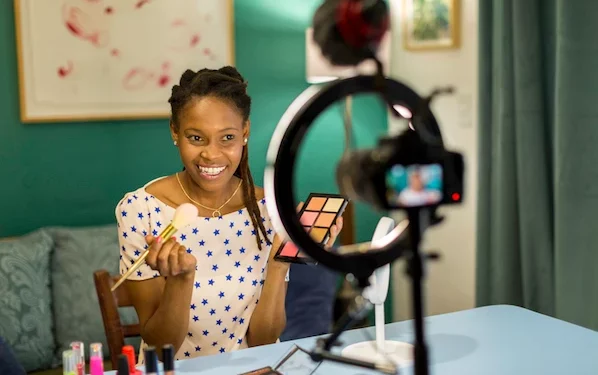
Across Nigeria, South Africa, Kenya, Ghana, Egypt, and beyond, millions of young Africans are building digital-first careers. Influencers are landing brand deals. Designers are selling templates globally. Educators are launching courses. Podcasters are monetizing communities. Filmmakers are licensing content.
But visibility is not the same as viability.
For every viral creator, there are hundreds struggling to convert attention into stable income.
So let’s move beyond inspiration and break down the mechanics.
How does money actually move in Africa’s creator economy?
Where does it originate?
Who controls the flow?
Where does it leak?
And how can creators position themselves to capture more of it?
This is not about hype. It is about infrastructure, economics, and leverage.
The Size of the Opportunity
Globally, the creator economy is estimated to be worth over $100 billion and growing annually. Africa represents one of the fastest-growing digital populations in the world, with over 570 million internet users and one of the youngest populations globally.
Key realities shaping Africa’s creator economy:
Over 60 percent of Africa’s population is under 25
Smartphone penetration continues to rise rapidly
Social media usage is expanding year over year
Digital payments adoption is increasing
Nigeria alone has over 100 million internet users. South Africa has one of the continent’s most mature digital advertising markets. Kenya leads in mobile payment innovation. Ghana’s influencer marketing industry is expanding quickly.
The audience is here. The demand is here.
But audience growth does not automatically equal income growth.
To understand income, we must understand flow.

The Five Primary Revenue Pipelines
Money in Africa’s creator economy typically flows through five core channels. Each has different mechanics, margins, and levels of control.
1. Brand Partnerships: The Visible Pipeline
This is the most recognized income source.
Brands pay creators for:
Sponsored posts
Campaign collaborations
Product placements
Event hosting
Influencer takeovers
User-generated content
In more mature African markets, influencer marketing budgets have grown significantly over the past five years. Large telecoms, fintechs, FMCGs, betting companies, and tech startups allocate millions annually toward creator campaigns.
But here is the structural truth.
Brand money is cyclical.
Marketing budgets fluctuate based on:
Quarterly performance
Economic shifts
Industry performance
Campaign seasonality
In Q4, brand spend spikes. In Q1, it often slows.
This creates income volatility for creators who rely heavily on brand deals.
Average campaign payouts vary widely depending on:
Audience size
Engagement rate
Niche
Deliverables
Negotiation power
But even high-earning influencers face delayed payments, contract disputes, and inconsistent deal flow.
Brand money moves through negotiation pipelines, agency approvals, internal finance processes, and payment timelines. It is not immediate.
This is why brand dependency limits financial predictability.
2. Platform Monetization: The Algorithm Layer
Platforms like YouTube, TikTok, Instagram, and Facebook offer monetization tools, but Africa faces structural limitations.
Challenges include:
Lower CPMs compared to US and European markets
Regional eligibility restrictions
Currency conversion complexities
Minimum payout thresholds
For example, YouTube CPM rates in many African countries are significantly lower than in North America. A creator might earn a fraction per thousand views compared to a US-based counterpart.
This means:
1 million views in the US may generate substantially more revenue than 1 million views in Nigeria.
Platform monetization works best when:
Audience includes high-CPM countries
Content is advertiser-friendly
Views are consistent and high-volume
For most African creators, platform income acts as supplemental revenue rather than a foundation.
Money flows from advertisers to platforms, then to creators after deductions and eligibility filters.
Control is limited.
3. Affiliate Marketing: Commission-Based Flow
Affiliate marketing is growing quietly across Africa.
Creators promote:
E-commerce platforms
Tech tools
Educational products
SaaS subscriptions
Financial apps
They earn commissions per sale or action.
Affiliate income works when:
Audience trust is strong
Product alignment is natural
Tracking systems are reliable
However, cross-border commission payments often involve:
International payment processors
Currency conversion
Payout minimums
Many creators underestimate affiliate potential because they do not track link performance consistently.
When structured well, affiliate revenue can become semi-passive.
Money moves from consumer to company to affiliate system to creator.
Margins depend on commission rates and volume.
4. Direct-to-Audience Sales: The Ownership Layer
This is the most powerful shift in Africa’s creator economy.
Creators are increasingly selling directly to their audience.
Examples include:
Digital courses
Templates
Ebooks
Masterclasses
Membership programs
Coaching
Design assets
Paid newsletters
Direct sales change the flow.
Instead of:
Brand → Creator → Audience
The flow becomes:
Audience → Creator
Fewer intermediaries. Higher margins.
If a creator sells a ₦15,000 digital product and sells 100 units, that is ₦1.5 million in revenue, without negotiating a brand contract.
But here is the catch.
Direct sales require infrastructure:
Payment gateways
Wallet systems
Automated delivery
Refund management
Sales tracking
Customer data collection
Without structure, creators lose sales to friction.
Money only moves efficiently when systems support it.
5. Recurring Revenue Models: The Stability Layer
Recurring income is the most underrated layer in Africa’s creator economy.
This includes:
Subscription communities
Monthly membership groups
Exclusive paid access
Retainer-based services
Ongoing coaching programs
Recurring revenue reduces volatility.
If 200 members pay ₦5,000 monthly, that is ₦1 million recurring revenue.
Predictable income allows:
Better financial planning
Hiring support
Strategic investments
Reduced panic during slow seasons
Money in recurring models flows consistently rather than episodically.
This is how creators transition from hustle to structure.
The Infrastructure Problem in Africa
Understanding how money moves requires acknowledging friction points.
Africa is not one market. It is 54 countries with:
Different currencies
Different regulations
Different banking systems
Different tax structures
Creators face challenges like:
Cross-border payment delays
Currency volatility
High transaction fees
Inconsistent banking timelines
Limited global payment access
For example:
A Nigerian creator selling to US customers may need USD settlement support.
A Kenyan creator may rely heavily on mobile money systems.
A South African creator may operate within more formalized banking infrastructure.
If payment systems are fragmented, money slows down.
Fragmentation often looks like:
Manual payment confirmations
WhatsApp payment proofs
Multiple payment apps
Separate accounts for different currencies
Poor revenue tracking
When systems are scattered, financial clarity disappears.
And without clarity, scaling becomes guesswork.
Where Creators Lose Money
Money does not only move forward. It leaks.
Common revenue leaks in Africa’s creator economy include:
1. Underpricing
Many creators undervalue products due to:
Fear of rejection
Audience income assumptions
Comparison to free content
This reduces margins and long-term sustainability.
2. High Transaction Fees
Using multiple third-party platforms can compound fees:
Payment processing fees
Currency conversion charges
Withdrawal fees
Small percentages add up significantly over time.
3. Poor Conversion Systems
If 10,000 people click a product link but only 50 purchase, the problem is not traffic.
It is:
Messaging
Pricing
Checkout friction
Trust gaps
Without tracking conversion rates, creators cannot optimize.
4. Irregular Cash Flow
Delayed brand payments create liquidity issues.
Without savings or recurring revenue, creators are forced into reactive decisions.
5. No Data Tracking
Many creators know their follower count but cannot answer:
What is my monthly profit?
Which product sells most?
What is my average order value?
What percentage of buyers return?
Without these metrics, growth is accidental.
The Key Metrics That Define Money Movement
If you want to understand how money truly moves in your creator business, track:
Revenue by Source
How much comes from:
Brands
Products
Affiliate
Subscriptions
Diversification reduces risk.
Conversion Rate
Visitors ÷ Purchases.
If 1,000 people visit your storefront and 30 buy, your conversion rate is 3 percent.
Improving from 3 percent to 5 percent significantly increases revenue without increasing traffic.
Average Order Value
If customers spend ₦10,000 per purchase on average, increasing it to ₦15,000 increases revenue without new buyers.
Bundles and upsells drive this.
Customer Lifetime Value
How much does a buyer spend over time?
Repeat purchases build wealth faster than constant new traffic.
Profit Margin
Revenue minus expenses.
A high-revenue creator with low margins may be less sustainable than a mid-revenue creator with strong margins.

The Strategic Shift Happening Across Africa
The African creator economy is moving through three stages.
Stage 1: Visibility
Creators focus on growing followers.
Stage 2: Monetization
Creators begin brand deals and affiliate links.
Stage 3: Ownership
Creators build products, storefronts, communities, and systems.
The future belongs to Stage 3 creators.
Ownership creates leverage.
When you control:
Your product
Your pricing
Your payment system
Your customer data
You control your income direction.
The Role of Structured Storefronts
A structured storefront centralizes:
Product listings
Multi-currency payments
Wallet settlement
Sales tracking
Customer management
Instead of money moving through scattered apps, it flows through one organized system.
This provides:
Visibility
Efficiency
Automation
Scalability
When revenue streams are consolidated, you can make informed decisions.
Without consolidation, growth feels chaotic.
The Long-Term Wealth Equation
Money in Africa’s creator economy moves fastest toward creators who:
Diversify income streams
Build direct sales channels
Automate delivery
Track performance consistently
Reduce dependency on one platform
Plan across currencies
Create digital assets
The creator economy is not just about influence.
It is about infrastructure.
Final Thoughts
Africa’s creator economy is vibrant and expanding.
But the creators who build lasting wealth will not be the ones who chase every trend.
They will be the ones who understand how money moves:
From brands to creators.
From platforms to creators.
From audiences directly to creators.
And more importantly, how to structure that flow efficiently.
When you understand revenue mechanics, you stop chasing virality blindly.
You start designing income systems intentionally.
And when your income flows through organized, trackable systems, growth stops being random.
It becomes strategic.
The future of Africa’s creator economy will not just be built on creativity.
It will be built on clarity, ownership, and financial structure.
Related Content