Money Made Simple
Building a Financial Buffer as a Creator: Step-by-Step
Irregular income is part of creator life, but panic does not have to be. This step-by-step guide shows how creators can build a financial buffer that protects them during slow months and delayed payments.
For most creators, money does not arrive gently.
It shows up late.
It arrives in fragments.
It comes in different currencies.
Sometimes it disappears for weeks.
And yet, creators are expected to keep producing, stay visible, negotiate confidently, and make long-term decisions as if income were stable.
This is why so many talented creators burn out, not because they are bad at what they do, but because they are financially exposed.
A financial buffer is not a luxury.
It is the difference between panic and control.
Between reactive decisions and intentional growth.
What a financial buffer actually is for creators
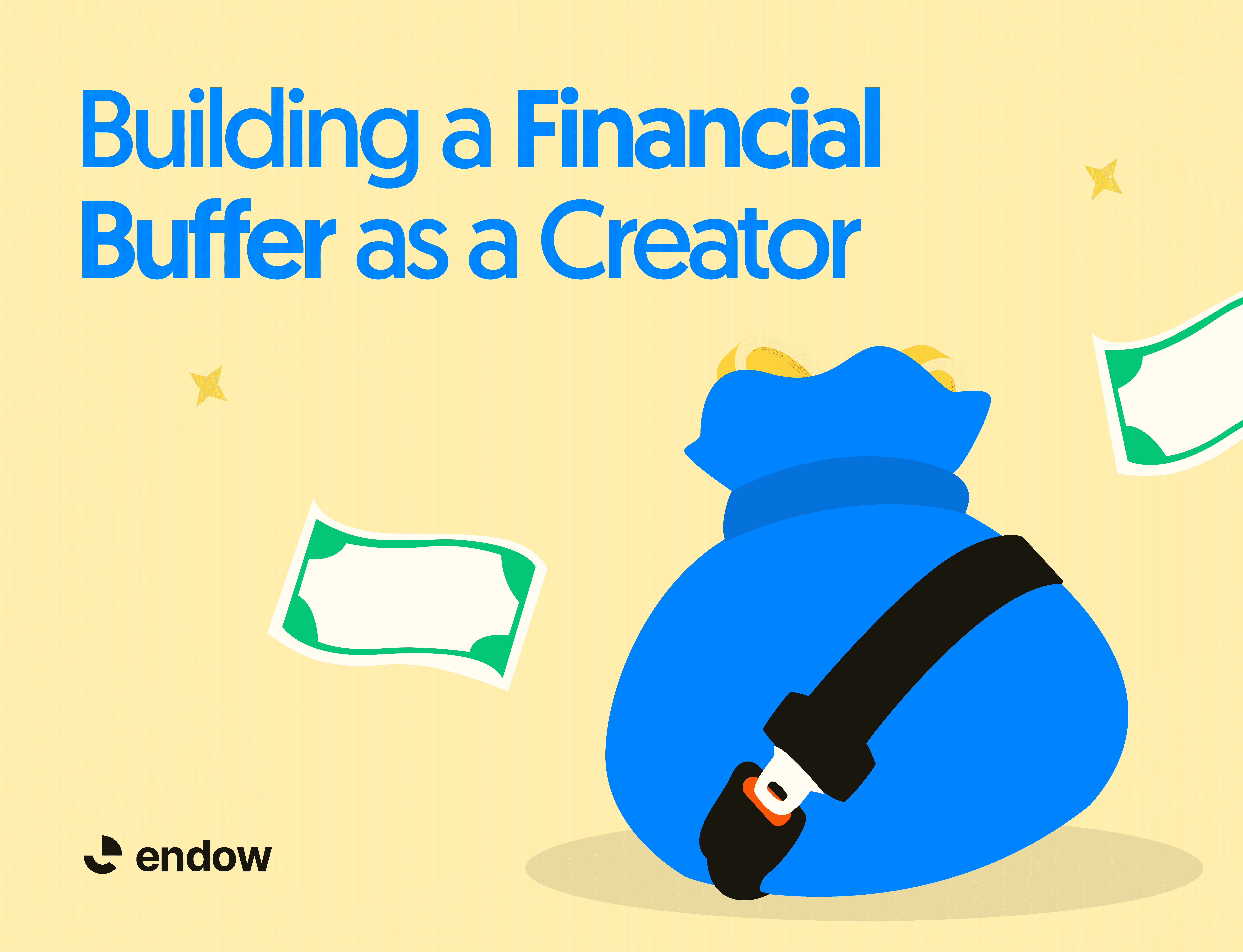
A financial buffer is money set aside specifically to protect you from income gaps, delayed payments, slow months, and unexpected expenses.
For creators, a buffer is not the same as savings for fun or long-term investing. It has a very clear job.
A creator buffer exists to:
Cover essential living and business costs when income slows
Absorb payment delays without stress
Give you time to say no to bad deals
Prevent desperate withdrawals or poor FX decisions
Reduce emotional pressure around money
Think of it as shock absorption.
When income fluctuates, systems absorb the impact. When there is no buffer, the creator absorbs everything personally.
Why creators struggle to build buffers
Most creators already know they should save. The problem is not knowledge. It is structure.
Creators face unique challenges:
Income is irregular and unpredictable
Payments are delayed without warning
Multiple platforms pay at different times
Expenses are mixed with personal spending
Currency conversion eats value quietly
Without systems, saving feels impossible. Money comes in and goes out too fast.
The solution is not discipline alone. It is building a process that works with creator reality, not against it.

Step 1: Understand your real monthly baseline
Before you save anything, you need clarity.
Most creators do not know how much they actually need to survive a month. They guess.
Your baseline is the minimum amount you need to cover:
Rent or housing
Food
Utilities
Internet
Transportation
Basic subscriptions
Essential business costs
This is not your lifestyle budget. It is your survival number.
Sit down and calculate:
The lowest amount you can live on without stress
The non-negotiable expenses that repeat every month
This number becomes the foundation of your buffer.
If you do not know this number, you cannot build anything meaningful.
Step 2: Decide what “enough” looks like for you
A common rule says you should save three to six months of expenses.
For creators, this range is useful but flexible.
Early-stage creators may aim for:
One month buffer first
Then two months
Then three
Established creators may need:
Three to six months
Or more if income is highly seasonal
The key is progression, not perfection.
Your first goal is not safety forever.
Your first goal is reducing panic.
Even one month of buffer changes how you think, negotiate, and plan.
Step 3: Separate buffer money from spending money
This step is non-negotiable.
If your buffer lives in the same account you spend from, it will disappear.
Creators need separation, not willpower.
Your buffer should:
Sit in a different wallet or sub-account
Be harder to access than your daily spending account
Be clearly labeled and mentally protected
This separation creates friction. Friction is good.
It gives you a moment to think before touching money meant for protection.
Step 4: Build the buffer from income peaks, not averages
Creators make a note mistake. They try to save during low months.
That rarely works.
Buffers are built during good months, not bad ones.
When income spikes:
Brand deals land
Products sell well
Platform payouts increase
That is when buffer contributions should happen automatically.
Instead of asking “Can I save this month?”, ask:
“How much of this spike belongs to future me?”
Even saving 10 to 20 percent of high-income months compounds faster than forcing savings during slow periods.
Step 5: Use rules, not emotions
Emotional saving fails.
Rules work.
Creators who successfully build buffers use simple rules like:
Every brand deal contributes a fixed percentage
Product revenue sends an automatic portion to buffer
USD income stays untouched until buffer goals are met
Buffer withdrawals are only allowed for predefined reasons
Rules remove negotiation with yourself.
When money arrives, it already knows where it is going.
Step 6: Protect buffer money from value loss
For creators earning in volatile currencies, saving alone is not enough.
If your buffer loses value through forced conversion or inflation, it fails its purpose.
This is why currency choice matters.
Creators should:
Hold buffer funds in stable currencies where possible
Avoid unnecessary conversions
Convert intentionally, not reactively
Track FX losses as real costs
A buffer that shrinks silently is not protection. It is an illusion.

Step 7: Define what your buffer can be used for
A buffer is not a free-for-all.
Before you build it, define its job clearly.
Valid buffer uses may include:
Covering living costs during zero-income months
Handling delayed platform or brand payments
Emergency equipment replacement
Medical or family emergencies that affect work
Invalid uses might include:
Impulse purchases
Lifestyle upgrades
Risky investments
Funding avoidable overspending
Clarity protects the buffer from erosion.
Step 8: Rebuild immediately after using it
Using your buffer is not failure.
Not rebuilding it is.
Creators who stay financially stable treat buffer use as temporary.
Once income resumes:
Refill the buffer first
Return it to its target level
Resume normal spending afterward
This keeps protection intact for the next disruption.
Why buffers change how creators make decisions
The biggest benefit of a buffer is not money. It is behavior.
Creators with buffers:
Say no to exploitative deals
Negotiate payment terms confidently
Avoid panic withdrawals
Plan content long-term
Take strategic breaks without fear
Creators without buffers:
Accept bad terms
Chase every opportunity
Burn out faster
Feel trapped by visibility pressure
The buffer creates space. Space changes everything.
Common mistakes creators make when building buffers
Many creators attempt to save and fail because of avoidable mistakes.
Some common ones include:
Treating savings as optional
Mixing buffer funds with spending accounts
Saving leftovers instead of allocating intentionally
Ignoring FX and conversion losses
Draining the buffer without a rebuild plan
These mistakes are structural, not personal.
The solution is not trying harder. It is designing better systems.

How Endow supports buffer building for creators
Building a buffer requires visibility, separation, and control.
This is where Endow fits naturally into a creator’s financial system.
Centralized income visibility
Endow shows all income sources in one place, making it easier to identify peaks worth saving from.
USD and NGN flexibility
Creators can hold value in USD or NGN without forced conversion, protecting buffer value.
Sub-accounts and intentional movement
Money can be moved deliberately between holding, buffer, and spending accounts.
Automated payouts and rules
Creators can set patterns that route income automatically, reducing emotional decisions.
Clean reporting
Seeing income trends over time makes it easier to plan realistic buffer targets.
Endow does not force saving.
It makes saving possible.
A realistic buffer timeline for creators
This is what buffer building often looks like in real life.
Month 1 to 2
You identify your baseline and separate accounts.
Month 3 to 6
You build your first one-month buffer during income spikes.
Month 6 to 12
You grow toward two or three months of coverage.
Year 2 and beyond
Your buffer becomes part of a larger financial system, supporting growth, investment, and rest.
There is no rush. There is only consistency.
Buffer building is not about fear
Some creators resist buffers because they associate them with scarcity thinking.
In reality, buffers create abundance.
They allow you to:
Take creative risks
Invest in better tools
Collaborate strategically
Think beyond the next payout
Security enables creativity. It does not limit it.
Final thoughts
Creators do not fail because they lack ambition.
They fail because volatility hits unprotected systems.
A financial buffer is not about pessimism.
It is about respect for the reality of creative work.
Income will fluctuate. Platforms will change. Payments will delay.
Buffers remain.
Creators who build them early gain control, calm, and longevity.
Get Endow Now!
Related Content