Create Smarter
How to Build a Scalable Creator Workflow
Scaling as a creator is not about working harder. It is about building workflows that support growth, income, and consistency without burnout. This guide breaks down how creators can build systems that scale.
The creator economy rewards visibility, but it punishes chaos.
Many creators experience the same trajectory: rapid growth leads to increased opportunities, brand deals multiply, income becomes irregular, and suddenly the thing that once felt freeing starts to feel overwhelming. Deadlines pile up. Payments slip through the cracks. Content becomes reactive instead of intentional. What began as creative expression transforms into an exhausting treadmill of obligations.
This is not a talent problem. It's a workflow problem.
A scalable creator workflow is what separates creators who burn out from creators who build careers that last. It's the difference between constantly "keeping up" and intentionally growing. It's what allows some creators to thrive with multiple income streams while others struggle to manage even one.
At Endow, we see this pattern clearly. Creators who struggle financially almost always struggle operationally first. When your workflow is fragile, your income becomes fragile too. The chaos in your calendar eventually shows up in your bank account.
This guide breaks down how creators can build workflows that scale without adding unnecessary complexity, stress, or tools that create more problems than they solve.
What a Scalable Creator Workflow Actually Means
A scalable workflow is not about doing more. It's not about productivity hacks, waking up at 5 AM, or following some guru's 47-step content system.
It's about creating a system that continues to work when:
Your audience grows from hundreds to thousands (or more)
Your income becomes inconsistent across platforms and partners
Your projects overlap and deadlines compress
Your time becomes limited due to success, not failure
You need to bring collaborators into your process
In practical terms, a scalable workflow allows you to:
Create content consistently without creative burnout
Handle multiple income streams without financial confusion
Collaborate with others without money disputes or resentment
Track performance and income without constant guesswork
Make informed decisions about what to do next
If your workflow collapses the moment things "get busy," it's not scalable. If success makes your life harder instead of better, your system is working against you.
Why Most Creator Workflows Break Under Pressure
Before building a better system, it helps to understand why most creators struggle. The breaking points are predictable and preventable.
1. Everything Lives in the Creator's Head
Many creators operate entirely from memory in the early stages.
Content ideas exist as vague notions. Deadlines are remembered but not written down. Brand partnership terms live in email threads. Invoices are tracked mentally. Expenses are justified retroactively.
This works at the beginning when volume is low and stakes are manageable. It breaks as soon as complexity increases. Your brain is excellent at creativity but terrible at being a database.
The mental load becomes unsustainable, and creators start dropping balls without realizing it until consequences arrive: missed deadlines, forgotten invoices, unclear agreements that lead to disputes.
2. Creation, Distribution, and Money Are Not Separated
Creators often treat content creation, publishing, and payment as one unified process. They are not.
These are distinct activities with different timelines, success metrics, and requirements. When they're blended together, creators lose clarity on what's working, what's profitable, and what needs fixing.
You might create incredible content that doesn't reach the right audience. You might have great distribution on a platform that doesn't convert to income. You might earn well from one stream while hemorrhaging time on another that barely pays.
Without separation, you can't diagnose problems or double down on what works.
3. Income Is Tracked After the Fact
Most creators look at money only when something goes wrong.
Late payments trigger panic. Low months force uncomfortable conversations. Tax season becomes a scramble to reconstruct financial history from scattered screenshots and email confirmations.
By then, the damage is already done. Opportunities were missed. Pricing was undervalued. Expenses spiraled without awareness.
A scalable workflow makes money visible early and continuously, not just when it becomes urgent. Financial clarity should inform decisions, not just document consequences.
4. Tools Multiply Without Integration
As creators grow, they accumulate tools. A scheduling app here. A finance tracker there. A project management platform. A separate invoicing system. Cloud storage in multiple places.
Each tool solves one problem while creating another: context switching, duplicate data entry, things falling between cracks when systems don't communicate.
Scalable workflows minimize tools and maximize integration. Every additional platform should justify itself by reducing complexity, not adding to it.
The Three-Layer Creator Workflow Model
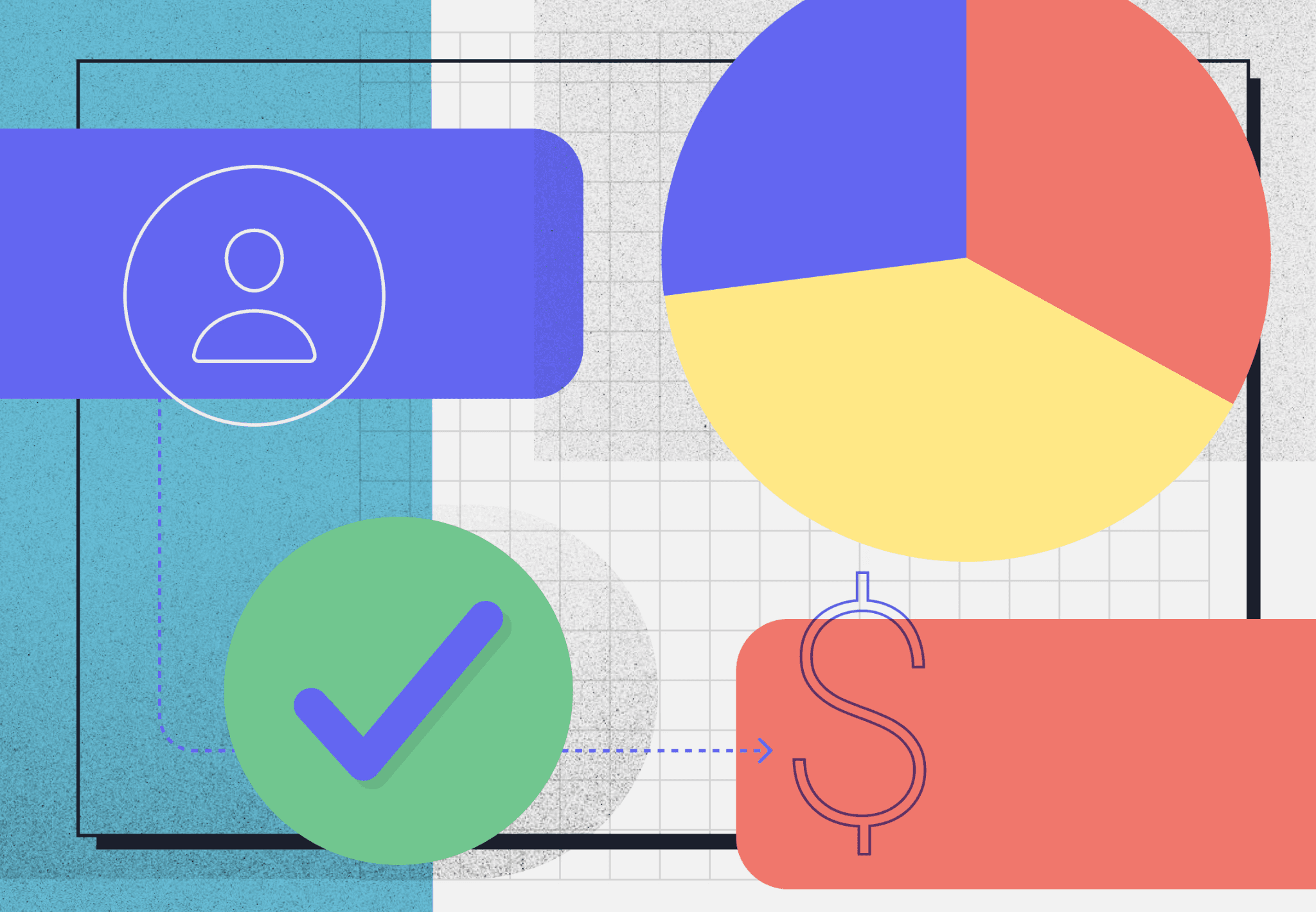
Every scalable creator workflow rests on three foundational layers:
Creation
Distribution
Revenue and Operations
Each layer must work independently while still feeding into the others. Breakdown in any layer eventually affects the entire system.
Layer One: The Creation Workflow
This is where most creators focus their attention, and ironically, where many overcomplicate things.
A scalable creation workflow answers three questions clearly:
What am I creating?
When am I creating it?
Why am I creating it?
Let's break down how to structure this layer for long-term sustainability.
Content Pillars Over Random Ideas
Creators who scale successfully don't chase ideas daily. They define 3 to 5 content pillars—themes they return to consistently.
For example:
Education (teaching your audience specific skills)
Commentary (your perspective on industry trends)
Behind-the-scenes (process and personal journey)
Product-led content (demonstrating or reviewing tools)
Personal insight (stories and lessons from experience)
This framework reduces decision fatigue dramatically. Instead of asking "what should I create today?" you ask "which pillar needs content this week?"
Content pillars also help your audience understand what to expect from you. Consistency in theme builds trust and recognition, even when format varies.
Batch Creation Beats Daily Hustle
Scalable workflows favor batching over daily grinding.
Instead of creating content under pressure every single day, successful creators block dedicated time to:
Ideate multiple pieces at once
Create several pieces in one focused session
Edit in a separate block when in analytical mode
Schedule everything in advance
This approach allows output to grow without requiring more emotional energy. You're not constantly switching between creative and logistical thinking. You protect deep work time and reduce the startup cost of getting into creative flow.
Batching also reveals patterns. When you create five pieces in sequence, you notice what works, what feels forced, and what you actually enjoy making.
Clear Ownership in Collaborative Creation
If you work with editors, designers, videographers, or other collaborators, clarity becomes non-negotiable.
Every piece of content should have:
A clear owner (who makes final decisions)
A clear deadline (when it must be complete)
A clear delivery format (what "done" looks like)
A clear approval process (how feedback flows)
Ambiguity is the enemy of scale. When five people assume someone else is handling something, nothing gets handled. When deadlines are vague, they're ignored. When quality standards are unstated, they're unmet.
Document your collaboration process, even if it feels overly formal at first. The structure protects relationships when pressure increases.
Layer Two: The Distribution Workflow
Great content without structured distribution limits growth. Many talented creators remain invisible simply because they treat distribution as an afterthought.
Distribution is not posting. It's positioning.
Platform Roles Must Be Defined
Each platform should serve a specific purpose in your overall strategy.
For example:
Instagram or TikTok for reach (discovery and virality)
X or LinkedIn for authority (thought leadership and networking)
Newsletter or blog for depth (owned audience and long-form value)
Digital store or landing page for conversion (monetization)
Posting the same thing everywhere without intent creates noise, not growth. Audiences on different platforms have different expectations, consumption habits, and relationships with creators.
Tailor your content to each platform's strength while maintaining your core message. Repurposing is smart; copy-pasting is lazy.
Scheduling Removes Emotional Decision-Making
Creators burn out when every post requires a fresh decision about what, when, and how to share.
Scheduling content in advance:
Protects mental energy for creative thinking
Improves consistency even during difficult periods
Allows creators to focus on strategy instead of tactics
Creates breathing room for experimentation
Scalability depends on predictability. Your audience should know when to expect content from you. You should know that publication happens even when you're sick, traveling, or focused on other projects.
This doesn't mean sacrificing spontaneity entirely. Leave room for timely content while maintaining your scheduled baseline.
Performance Feedback Loops
Distribution workflows must include regular review and analysis.
Creators should periodically ask:
What content drives engagement versus vanity metrics?
What drives actual income versus just likes?
What drains effort without meaningful return?
What formats or topics consistently outperform others?
Without feedback, creators scale the wrong things. You might double down on content that feels good to make but doesn't move the needle. You might abandon approaches that work simply because they're not immediately gratifying.
Set monthly or quarterly review sessions. Look at the data. Adjust based on results, not feelings.

Layer Three: Revenue and Operations Workflow
This is where most creators struggle the most, and where the greatest leverage exists.
Visibility without financial structure leads to instability. You can have a million followers and still be broke if this layer is broken.
A scalable creator workflow treats money as a system, not an afterthought.
Centralizing Income Streams
Creators today earn from multiple sources simultaneously:
Brand deals and sponsorships
Ad revenue from platforms
Digital products (courses, templates, guides)
Subscriptions (Patreon, membership communities)
Affiliate commissions
Consulting or one-on-one services
Speaking fees and appearances
Without centralization, income feels unpredictable even when it's actually quite stable across sources.
Creators need a single place to see:
What money came in
From which source
When it arrived
Under what terms or agreements
What's still outstanding
This visibility fundamentally changes decision-making. You can identify which income streams deserve more focus. You can spot payment delays before they become crises. You can plan based on reality instead of guesswork.
Separating Business and Personal Money
This is non-negotiable for scale, yet most creators resist it initially.
When creators mix personal and business finances:
Pricing becomes emotional instead of strategic
Business expenses become unclear and untrackable
Growth decisions become unnecessarily risky
Tax preparation becomes a nightmare
Personal financial security suffers
A scalable workflow separates:
Creator income (all business revenue)
Business expenses (costs of running your creator business)
Personal spending (your actual living expenses and discretionary use)
This clarity protects both creativity and longevity. You know what your business actually costs to run. You know what you can safely pay yourself. You know what's available for reinvestment versus personal use.
It also professionalizes your operation, which matters when negotiating with brands or seeking financing.
Planning for Irregular Income
Creators do not get paid like employees. The paycheck doesn't arrive on the 1st and 15th like clockwork.
Some months are exceptionally strong. Others are quiet. Many creators panic during quiet months and overspend during strong ones, creating a feast-or-famine cycle that never stabilizes.
Scalable workflows plan for this reality intentionally:
Track your baseline monthly needs (both business and personal)
Smooth income across months (save excess, use reserves during gaps)
Avoid lifestyle expansion during high months
Build a buffer that covers 3-6 months of baseline needs
Stability is built intentionally, not accidentally. The creators who weather industry changes are those who planned for variability from the beginning.

The Strategic Role of Automation in Scaling
Automation is not about replacing creativity. It's about protecting it.
Your creative energy is finite and precious. Every minute spent on administrative tasks is a minute not spent creating, strategizing, or resting.
Creators should automate:
Revenue tracking across platforms
Expense categorization
Income splitting between business and personal accounts
Payment reminders to brands or clients
Invoice generation
Tax preparation basics
Every manual task repeated monthly is a signal for automation. If you do it more than three times in the exact same way, systematize it.
This is where financial tools become workflow tools, not just accounting software. The right platform removes cognitive load by handling the mechanical parts of money management automatically.
Collaboration Without Conflict
As creators grow, they collaborate more frequently. Joint projects, co-created products, shared sponsorships, and team production become normal.
These collaborations fail not because of bad intent, but because of unclear systems.
A scalable workflow includes:
Clear revenue splits defined upfront
Defined payment timelines (who gets paid when)
Transparent tracking visible to all parties
Shared visibility into project finances
When money is clear, relationships last. When financial arrangements are ambiguous, even friends become adversaries.
Document everything. Use contracts for significant collaborations. Don't rely on "we'll figure it out later" because later arrives during disagreements, not during harmony.
Scaling Without Burning Out
Here's the truth most productivity content ignores: scalability is not infinite growth. It's sustainable growth.
Creators with strong workflows:
Say no more often, not less
Choose projects intentionally based on strategy
Protect rest as fiercely as they protect work
Build leverage instead of chasing volume
Recognize that doing everything means doing nothing well
The goal is not to do everything. The goal is to do what matters, consistently, without destroying yourself in the process.
Scalability means your business can grow without your stress growing proportionally. It means opportunities expand while your quality of life improves.
If growth makes you more miserable, you're not scaling. You're just doing more of what doesn't work.
How Endow Fits Into a Scalable Creator Workflow
Endow is specifically designed to support the revenue and operations layer of the creator workflow—the layer most creators struggle with and most tools ignore.
By centralizing income across sources, separating business and personal funds automatically, and giving creators real-time visibility into their actual numbers, Endow reduces cognitive load dramatically.
When creators know:
What they actually earn across all sources
What they actually spend on business versus personal
What they can safely use without compromising stability
They create better. They negotiate better. They scale better.
Workflow clarity leads to creative freedom. When the operational foundation is solid, you can take creative risks without financial anxiety.
👉 Start organizing your creator income with Endow
Conclusion: Systems Create Longevity
The creators who last are not always the most talented. They're the most structured.
Talent gets you started. Systems keep you going.
A scalable creator workflow is not about complexity. It's not about following someone else's rigid framework. It's about intentional design that supports your specific creative process and business model.
When your workflow supports your creativity instead of fighting it, growth stops feeling chaotic and starts feeling sustainable. When your systems handle the repetitive, you have energy for the meaningful.
Build systems now, before you desperately need them. Because by the time chaos forces you to get organized, you've already lost opportunities, money, and peace of mind you can't recover.
The best time to build a scalable workflow was when you started. The second best time is today.
Your future self—the one managing multiple income streams, collaborating with talented people, and actually enjoying the creator career you built—will thank you for the structure you create now.
Related Content