Creator Business
May 7, 2026
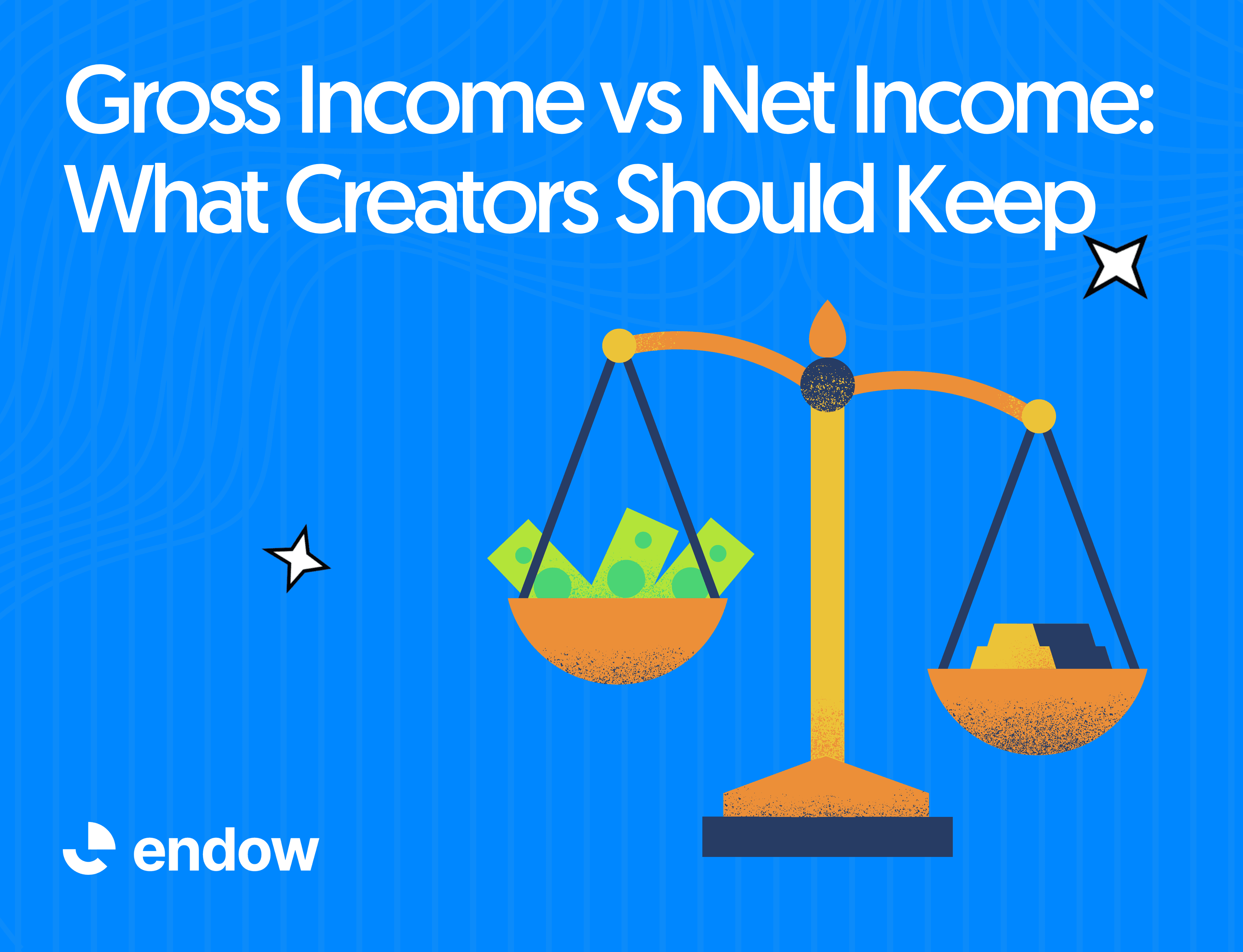
Gross Income vs Net Income: What Creators Should Actually Keep
A creator sees ₦1,500,000 land from a campaign and feels like they just had a breakthrough month.
A course creator closes a launch worth ₦3,000,000 and starts mentally allocating the money.
A YouTuber sees a large platform payout and assumes business is scaling fast.
On paper, these moments look like financial wins.
And often, they are.
But there is one financial misunderstanding that quietly distorts how many creators interpret success:
Confusing gross income with net income.
It sounds like a simple accounting distinction.
It is not.
For creators, this misunderstanding affects nearly everything:
How much you think you earn
How much you believe your business is growing
How confidently you spend
How accurately you price future work
How effectively you save
How realistically you plan
Many creators celebrate revenue numbers that look impressive but do not reflect what they actually keep.
That gap between what comes in and what stays is where financial confusion begins.
And over time, that confusion can quietly weaken an otherwise growing creator business.
Understanding gross income vs net income is one of the most important financial shifts a creator can make.
Because earning money is only one part of financial sustainability.
Keeping, managing, and understanding that money is what builds long-term stability.
This guide breaks down exactly what gross income and net income mean for creators, why the difference matters, and how to track both clearly so your business decisions are based on reality, not assumptions.
Why This Matters More for Creators Than Most Businesses
Traditional businesses often have dedicated finance systems.
They have bookkeeping.
Accounting processes.
Structured reporting.
Clear separation between revenue and profit.
Many creators do not.
Money often arrives through multiple disconnected channels:
Brand deals
Platform payouts
Affiliate commissions
Digital product sales
Tips
Subscriptions
Freelance services
Collaborative revenue splits
International transfers
Because creator income is often fragmented, it becomes easy to focus only on incoming payments.
The logic feels simple:
Money arrived.
Business is doing well.
But incoming payments only tell part of the story.
What matters more is:
How much remains after the costs of earning that money are removed.
That is your real financial position.
That is what determines sustainability.
That is what funds growth.
That is what protects your business during slower months.

What Is Gross Income?
Gross income is the total amount of money your creator business earns before deductions.
It is your top-line revenue.
The full amount generated before expenses, fees, taxes, and operational costs are removed.
Think of gross income as the total inflow.
Examples:
If a brand pays you ₦800,000 for a campaign
Your gross income is ₦800,000
If your course launch generates ₦2,000,000 in sales
Your gross income is ₦2,000,000
If affiliate partnerships generate ₦350,000
Your gross income is ₦350,000
Gross income reflects earning activity.
It shows how much revenue your business generated.
This number matters.
It helps track:
Growth trajectory
Revenue performance
Market demand
Monetization effectiveness
But it does not tell you what you actually made.
That is where net income comes in.
What Is Net Income?
Net income is what remains after all business-related costs are deducted from gross income.
It is what you actually keep.
This is the number that reflects financial reality.
If gross income is your business’s total inflow, net income is your real retained earnings.
For creators, deductions often include:
Platform transaction fees
Payment processing charges
Currency conversion costs
Software subscriptions
Editing costs
Designer or contractor payments
Marketing spend
Ad costs
Production costs
Equipment depreciation
Taxes
Refunds
Collaboration splits
Net income is the money left after these costs.
And this is the number that determines whether your creator business is financially healthy.
A Practical Creator Example
Let’s say a creator launches a digital course.
The course generates:
Gross revenue: ₦3,000,000
Looks great.
But then:
Payment processing fees: ₦90,000
Affiliate commissions: ₦250,000
Paid ads: ₦400,000
Video editing support: ₦180,000
Design costs: ₦80,000
Platform-related expenses: ₦60,000
Refunds: ₦70,000
Tax obligations: ₦300,000
Total expenses: ₦1,430,000
Net income:
₦1,570,000
Still strong.
But significantly different from ₦3,000,000.
The creator did not “make” ₦3,000,000.
They generated ₦3,000,000 in gross income.
They kept ₦1,570,000 in net income.
That distinction changes everything.
Why Creators Confuse Gross Income With Real Earnings
This confusion is extremely common.
And it happens for understandable reasons.
Revenue Feels Like Ownership
When money lands in your account, it feels earned.
Psychologically, creators often interpret incoming cash as available money.
But much of that money may already be committed.
To taxes.
To collaborators.
To software.
To production costs.
To future obligations.
Without structured tracking, these obligations become invisible.
Social Media Celebrates Revenue, Not Profit
Creators often share top-line numbers.
“Made ₦5M this month.”
“Closed six figures in sales.”
“Hit my biggest launch ever.”
These figures usually represent gross revenue.
Rarely net income.
This creates distorted benchmarks.
And many creators internalize unrealistic expectations.
Many Creators Operate Without Financial Separation
When business income and personal spending are mixed, visibility disappears.
It becomes difficult to distinguish:
Revenue generated
Costs incurred
Actual retained earnings
Without separation, gross income often feels larger than financial reality.
Why Net Income Matters More Than Gross Income
Gross income tells you whether money is coming in.
Net income tells you whether your business is actually working.
That distinction is critical.
Net Income Determines Sustainability
A creator earning ₦8,000,000 gross annually with high costs may retain less than a creator earning ₦4,500,000 with stronger margins.
The second creator may actually have the healthier business.
Because efficiency matters.
Revenue alone does not guarantee strength.
Net Income Determines What You Can Actually Spend
Many creators overspend because they budget based on gross income.
This creates pressure later.
Planning should always be based on what remains after obligations.
Not before.
Net Income Reveals Operational Problems
If gross income rises but net income remains flat, something is wrong.
Possible issues:
Rising expenses
Poor pricing
Excessive operational costs
Low-margin offers
Uncontrolled spending
Net income exposes inefficiency.
The Creator Expense Categories That Reduce Net Income
To understand what you keep, you need visibility into what reduces it.
These are the biggest creator expense categories.
Platform and Payment Fees
Many creators underestimate how much disappears here.
Examples:
Transaction charges
Marketplace fees
Withdrawal fees
Cross-border transfer fees
Conversion losses
These deductions compound over time.
Production Costs
The cost of creating often scales with quality.
Editing
Design
Equipment
Studio access
Assistants
These investments matter.
But they must be tracked.
Marketing Costs
Ads
Promotion
Email software
Audience acquisition tools
Marketing spend should be measured against revenue outcomes.
Collaboration Splits
Revenue shared with:
Co-creators
Affiliates
Managers
Partners
This is especially important.
Many creators mistakenly record total collaborative revenue as personal earnings.
It is not.
Only your allocated portion counts toward your true retained income.
Taxes
This is one of the most overlooked creator deductions.
Many creators mentally spend money that technically belongs to tax authorities.
This creates painful surprises later.
Gross Income Can Be Misleading
Here is a difficult truth:
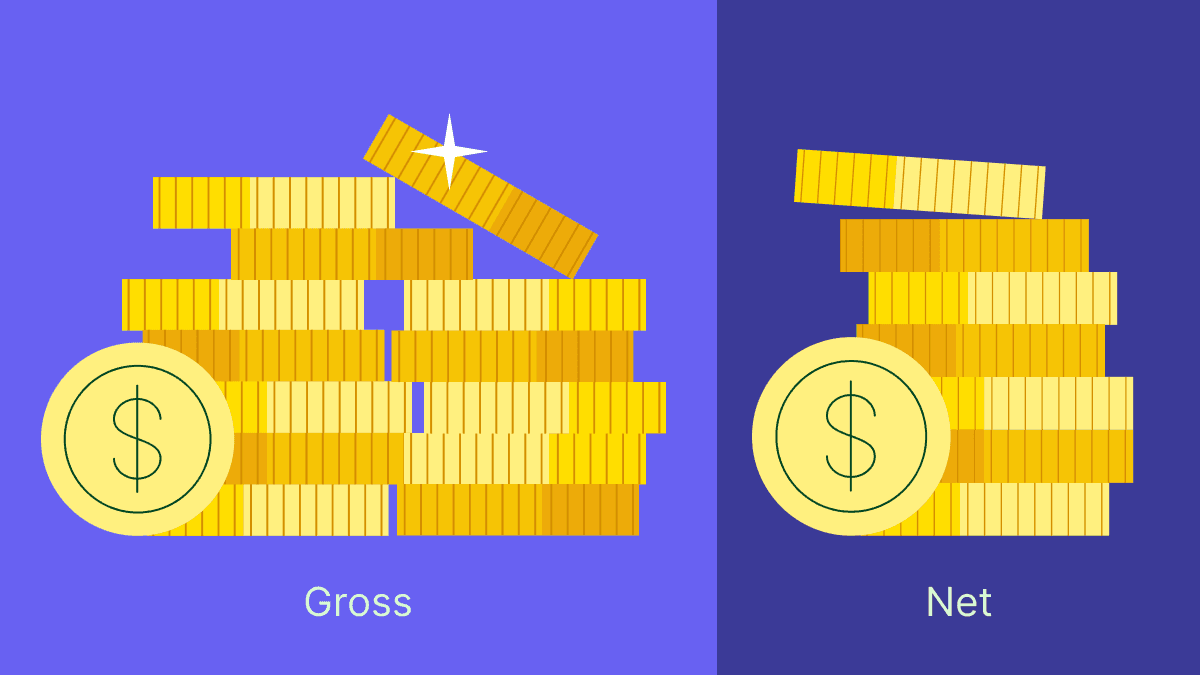
A high-gross creator business can still be financially fragile.
For example:
Creator A
Gross: ₦12M
Expenses: ₦9.5M
Net: ₦2.5M
Creator B
Gross: ₦7M
Expenses: ₦2M
Net: ₦5M
Who has the stronger business?
Creator B.
Higher revenue often looks more impressive.
But healthier margins create more resilience.
And resilience matters more than optics.
The Margin Creators Should Watch
One of the most useful metrics creators can track is profit margin.
Formula:
Net Income ÷ Gross Income × 100
Example:
Net income: ₦1,500,000
Gross income: ₦3,000,000
Profit margin = 50%
This shows how efficiently your creator business converts revenue into retained earnings.
Healthy margins vary by creator model.
But every creator should track them.
Because margins reveal operational quality.
How Creators Should Track Gross vs Net Income
Understanding the difference is one thing.
Tracking it consistently is what changes outcomes.
Track Revenue by Source
Separate:
Brand deals
Affiliate revenue
Digital products
Courses
Subscriptions
Tips
Freelance services
This creates visibility.
Log Every Expense
Every deduction matters.
Even small recurring costs add up.
Creators often underestimate the cumulative impact of software subscriptions and transaction fees.
Separate Business and Personal Accounts
This is foundational.
Without separation, financial clarity becomes extremely difficult.
Review Monthly
Ask:
What was gross?
What was net?
What reduced margins?
What improved efficiency?
Patterns emerge through review.
The Financial Decisions This Clarity Improves
When creators understand gross vs net income clearly, they make better decisions.
Better Pricing
You price based on retained value.
Not inflated revenue assumptions.
Smarter Spending
Expenses are evaluated through profitability.
Better Forecasting
Future planning becomes realistic.
Stronger Savings Systems
Emergency funds and reserves become accurately funded.
Healthier Growth Decisions
You invest from clarity.
Not excitement.
The Shift Every Creator Needs to Make
Many creators think like earners.
Financially mature creators think like operators.
Earners ask:
“How much came in?”
Operators ask:
“How much stayed?”
That question changes how you build.
It creates discipline.
It improves visibility.
It builds stronger systems.
And over time, it creates more sustainable creator businesses.
Final Thought
Gross income is exciting.
It reflects momentum.
Demand.
Growth.
But net income reflects truth.
And creator businesses are built on truth, not appearances.
A large payment means very little if most of it disappears through unmanaged costs.
The creators who build lasting businesses are not always those with the highest gross revenue.
They are often the ones with the clearest financial visibility.
Because what matters most is not what enters your business.
It is what remains after everything else is accounted for.
That is what you actually keep.
And that is the number that shapes your future.
Knowing your gross income is good.
Understanding your net income is what gives you control.
Track every revenue source, monitor deductions, and build complete financial visibility with Endow.
Start managing creator revenue with clarity using Endow.
Related Content


