Creator Economy
The Psychology of Lifestyle Inflation for Creators
Discover why lifestyle inflation affects creators, how rising income can quietly increase financial pressure, and the systems that help creators build sustainable wealth and financial freedom.
There is a strange phase that many creators experience after they start making real money.
At first, earning feels impossible.
The first brand deal feels like luck.
The first product sale feels exciting.
The first month you make more from your content than from your regular job feels almost surreal.
You promise yourself that if you ever make "good money," you'll be responsible.
You'll save.
You'll invest.
You'll build something sustainable.
Then something unexpected happens.
The money arrives.
And so do new expenses.
A better phone.
A new camera.
A nicer apartment.
More subscriptions.
More travel.
More convenience.
More upgrades.
More things that seem completely justified.
And before long, the creator who once celebrated earning ₦100,000 is wondering why earning ₦1,000,000 still doesn't feel like enough.
This is lifestyle inflation.
And it may be one of the most misunderstood threats to long-term creator success.
Not because it looks dangerous.
But because it often looks like progress.
The Creator Economy Makes Lifestyle Inflation Easy
Traditional careers tend to increase income gradually.
A promotion.
A raise.
A new role.
Income often grows in predictable increments.
Creator income rarely behaves this way.
A creator can go from earning almost nothing to earning several months' worth of income from a single campaign.
A course launch can outperform an entire year of freelance work.
One viral video can create opportunities that didn't exist six weeks earlier.
Growth often happens in jumps rather than steps.
The problem is that human psychology struggles to distinguish between temporary income and permanent income.
When creators experience a sudden increase in earnings, the brain often interprets it as a new baseline.
Not a peak.
Not a fortunate month.
A new normal.
That assumption becomes expensive.
The Dangerous Question Creators Start Asking
Most financial mistakes begin with a simple question:
"What can I afford now?"
It sounds responsible.
But it contains a hidden trap.
Because affordability is not the same thing as sustainability.
A creator might earn ₦2 million this month.
That doesn't necessarily mean they can afford a lifestyle that requires ₦2 million every month.
The creator economy is full of income spikes.
But lifestyle decisions tend to become permanent.
The expensive apartment remains.
The recurring subscriptions continue.
The monthly obligations stay.
Revenue fluctuates.
Expenses become fixed.
And that is where financial pressure begins.
Success Changes Your Reference Point
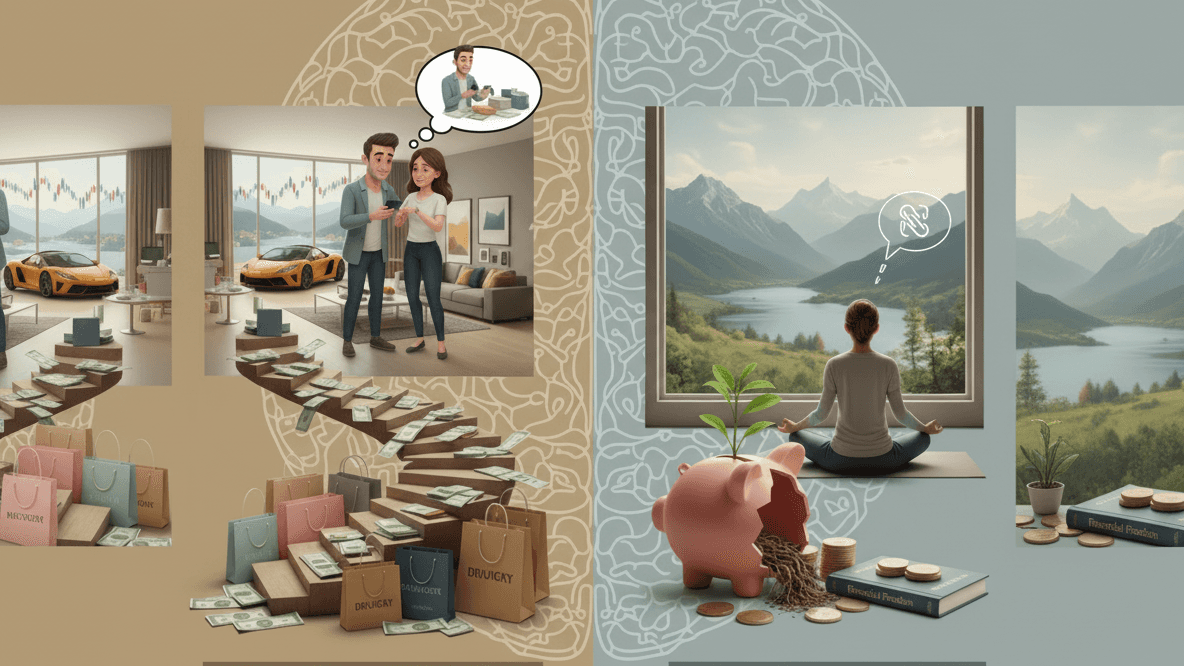
One of the most fascinating things about lifestyle inflation is that it changes how people experience money.
The creator who once felt wealthy earning ₦300,000 may feel stressed earning ₦1.5 million.
Not because they have less money.
Because their expectations have expanded.
Psychologists call this hedonic adaptation.
Humans quickly become accustomed to improvements.
The exciting new purchase eventually becomes ordinary.
The luxury becomes normal.
The upgrade becomes expected.
The satisfaction fades.
The expense remains.
This creates a cycle.
More income creates more spending.
More spending creates a need for more income.
More income creates higher expectations.
And the cycle repeats.
Many creators mistake this cycle for ambition.
Sometimes it is simply adaptation.
The Creator Status Trap
Lifestyle inflation is not always about comfort.
Sometimes it is about identity.
The creator economy is highly visible.
Success is often public.
People see the trips.
The equipment.
The office spaces.
The collaborations.
The events.
The lifestyle.
This creates subtle pressure.
Not necessarily from audiences.
Often from peers.
Creators compare themselves constantly.
Not just creatively.
Financially.
Operationally.
Socially.
The result is that spending can become symbolic.
The camera is no longer just a camera.
It becomes proof of seriousness.
The office is no longer just a workspace.
It becomes proof of growth.
The expense is no longer functional.
It becomes psychological.
And psychological spending is difficult to control because it solves emotional problems rather than practical ones.
Why Bigger Revenue Doesn't Always Create Bigger Wealth
This is one of the most important financial realities creators eventually discover.
Revenue and wealth are not the same thing.
A creator can double their income while making almost no progress financially.
Because growth in revenue often gets matched by growth in spending.
The creator who earned ₦500,000 and spent ₦400,000 saves ₦100,000.
The creator who earns ₦2 million and spends ₦1.9 million saves the same amount.
From the outside, the second creator appears dramatically more successful.
Financially, the gap may be smaller than it looks.
Sometimes it doesn't exist at all.
The creator economy celebrates revenue.
But long-term security comes from retention.
Not what you earn.
What you keep.
The Most Expensive Form of Lifestyle Inflation
Most people think of lifestyle inflation as personal spending.
The bigger problem for creators is often business lifestyle inflation.
As income grows, creators frequently increase business expenses without examining whether those expenses actually improve outcomes.
More software.
More tools.
More platforms.
More contractors.
More complexity.
More subscriptions.
Many of these decisions feel productive.
Some are.
Many are not.
There is a difference between investing in growth and purchasing the appearance of growth.
The challenge is that they often look identical at first.
When Growth Creates Anxiety
This sounds counterintuitive.
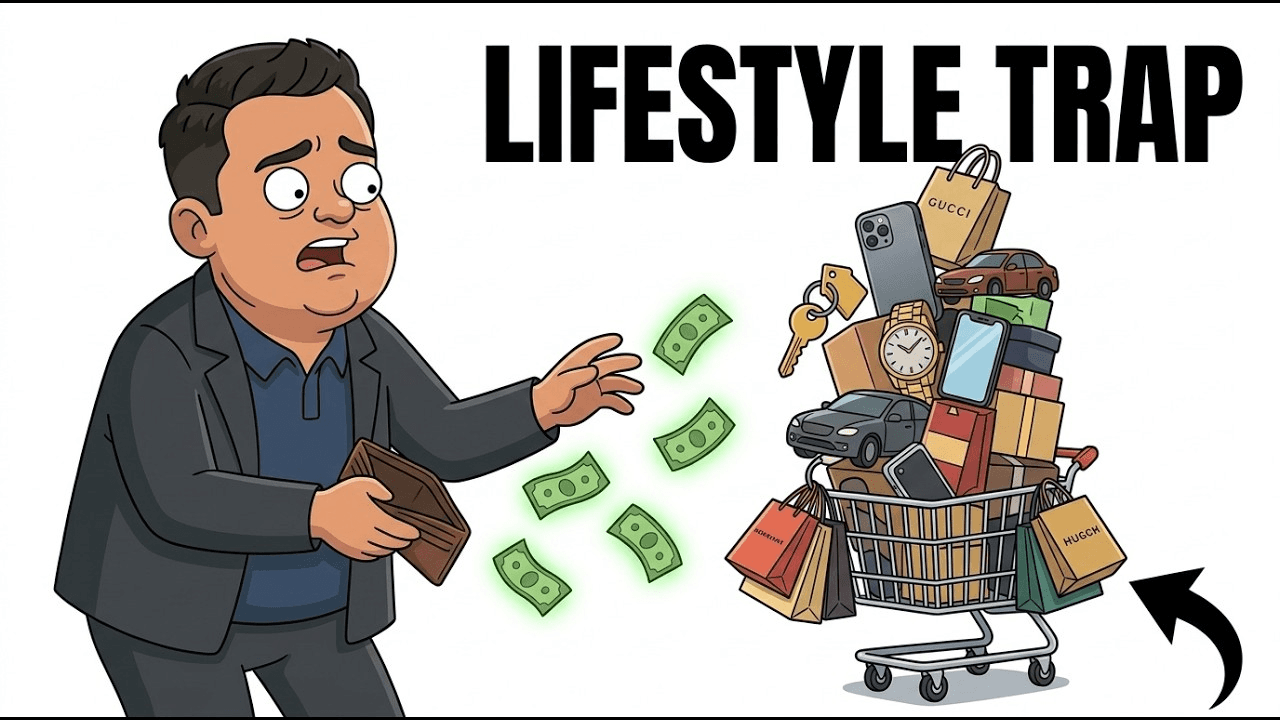
But many creators become more financially anxious after they start making more money.
Because success increases responsibility.
Higher expenses create higher pressure.
Larger teams create larger obligations.
More commitments create less flexibility.
The creator who once needed ₦200,000 to survive now needs ₦2 million.
The margin for error shrinks.
Suddenly, a slow month feels threatening.
Not because income disappeared.
Because obligations expanded.
This is why some creators who appear highly successful privately feel trapped.
Their lifestyle requires constant performance.
Their financial system has no room for uncertainty.
The Illusion of Future Income
Lifestyle inflation often depends on an assumption.
"I'll keep earning this."
Sometimes that's true.
Sometimes it isn't.
The creator economy changes quickly.
Platforms change.
Algorithms change.
Audience behavior changes.
Markets change.
Brand budgets change.
A creator who builds expenses around today's peak earnings may find themselves exposed when circumstances change.
The most resilient creators understand this.
They build lifestyles around average income.
Not exceptional months.
Why Lifestyle Inflation Feels Rational
The most dangerous aspect of lifestyle inflation is that every decision often makes sense individually.
The new laptop improves productivity.
The subscription saves time.
The upgrade enhances quality.
The office improves focus.
Each decision appears reasonable.
The problem emerges collectively.
A single expense rarely creates financial pressure.
Fifty small commitments often do.
The danger is cumulative.
Not dramatic.
Which is why many creators never notice it until they feel financially constrained despite earning more than ever.
The Financial Systems That Protect Creators
The solution to lifestyle inflation is not extreme frugality.
Creators should enjoy the rewards of their work.
Growth should improve quality of life.
The challenge is ensuring that spending follows intention rather than momentum.
The creators who manage this best tend to focus on three things.
Visibility
They know exactly where their money goes.
They understand spending patterns.
They can identify financial creep before it becomes a problem.
Separation
They distinguish between personal finances and business finances.
Revenue enters the business.
Compensation flows to the creator.
The two are not constantly mixed together.
Structure
They make financial decisions deliberately.
Not emotionally.
Not reactively.
Not because a successful month created temporary confidence.
The Real Goal Is Freedom
Most creators think they want more income.
What they actually want is more freedom.
Freedom to choose projects.
Freedom to take breaks.
Freedom to experiment.
Freedom to survive slow periods.
Freedom to build long-term.
Ironically, unchecked lifestyle inflation often reduces that freedom.
Because every new obligation requires future income to support it.
The creator becomes wealthier on paper.
But less flexible in reality.
The goal is not simply earning more.
The goal is creating options.
And options come from financial breathing room.
Not financial expansion.
Final Thoughts
Lifestyle inflation is rarely caused by greed.
More often, it is caused by adaptation.
Success changes expectations.
Income changes habits.
Growth changes identity.
And without realizing it, creators can build lifestyles that quietly consume the very opportunities their success created.
The creators who remain resilient over the long term are not necessarily the highest earners.
They are the ones who maintain visibility, preserve flexibility, and resist the temptation to convert every income increase into a permanent expense.
Because in the creator economy, financial success is not measured only by how much money comes in.
It is measured by how much freedom remains when it does.
The first defense against lifestyle inflation is visibility.
When you can clearly see your income, spending patterns, recurring expenses, and financial commitments, you make better decisions about growth.
Endow helps creators track revenue, monitor finances, manage income streams, and build the financial clarity needed for long-term success.
Start building a creator business with greater financial visibility using Endow today..
Related Content


