Learn & Grow
The 50-30-20 Rule for Nigerian Creators: The Ultimate Financial Playbook (2026 Edition)
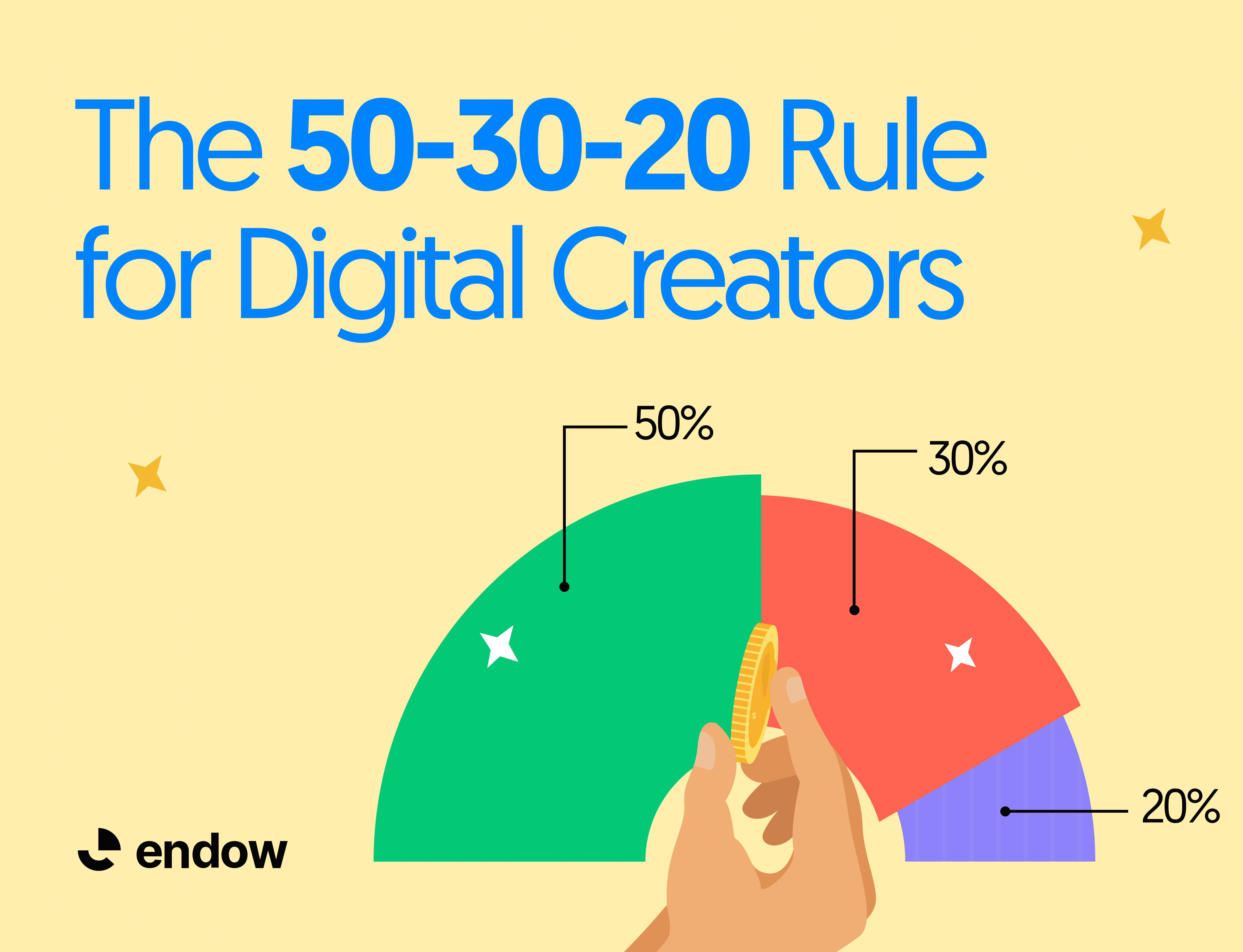
The 50/30/20 rule, popularized by Elizabeth Warren, breaks income into three buckets: 50% Needs: basic bills. 30% Wants: personal lifestyle. 20% Savings/Investments: retirement, emergency funds
The Nigerian creator economy is no longer just a "side hustle." It is a full-blown industry. From the skit makers in Lekki to the tech reviewers in Yaba, and the writers on Substack, Nigerian creators are tapping into a global market. But there is a silent struggle behind the viral videos and the "luxury" lifestyle: The Financial Chaos.
Most financial advice, including the famous 50/30/20 rule, was written for someone with a 9-to-5 job. It was written for someone who knows exactly how much will hit their account on the 25th of every month.
For you, the Nigerian creator, income is a rollercoaster. One month, you're closing a multimillion-naira deal with a fintech brand; the next month, AdSense is down, and your primary client is "reorganizing their budget."
At ENDOW, we understand that you aren't just an "influencer", you are a business. This playbook is designed to help you master your money using a modified 50/30/20 rule that actually works in the Nigerian context.
Part 1: Why Traditional Finance Fails African Creators
The 50/30/20 rule, popularized by Elizabeth Warren, suggests a simple split:
50% to Needs (Rent, food, basic bills)
30% to Wants (Entertainment, gadgets, "vibes")
20% to Savings/Investments (Debt payoff, retirement)
The "Gross Revenue" Trap
In a traditional job, your "income" is what hits your bank account after the company has handled your taxes and pension. For a creator, a ₦2,000,000 brand deal is Gross Revenue. If you immediately spend ₦1,000,000 on a personal "Need," you are spending money that technically belongs to the government or your business overhead.
This is the single biggest mistake Nigerian creators make. They confuse top-line revenue with take-home pay. A traditional employee earning ₦500,000 monthly can budget with that full amount because their employer has already deducted taxes and pension. But when you receive ₦2,000,000 from a brand partnership, that money comes with invisible obligations.
The Nigerian Volatility Factor
In Nigeria, "life happens" fast. Between fuel price hikes, fluctuating exchange rates (Naira vs. Dollar), and the unique cultural obligation of "Black Tax," a rigid monthly budget can feel like a cage.
Consider this: In early 2024, the Naira traded at approximately ₦900 to the Dollar. By mid-year, it had crossed ₦1,600. If your business depends on imported equipment or Dollar-denominated software, your costs nearly doubled while your Naira income remained flat.
Then there's the infrastructure tax, the costs Nigerians pay just to exist. Fuel for generators during power outages, multiple data plans because one network is never reliable, and water tankers because municipal supply is inconsistent. These aren't luxuries; they're necessities.
The Lack of a Safety Net
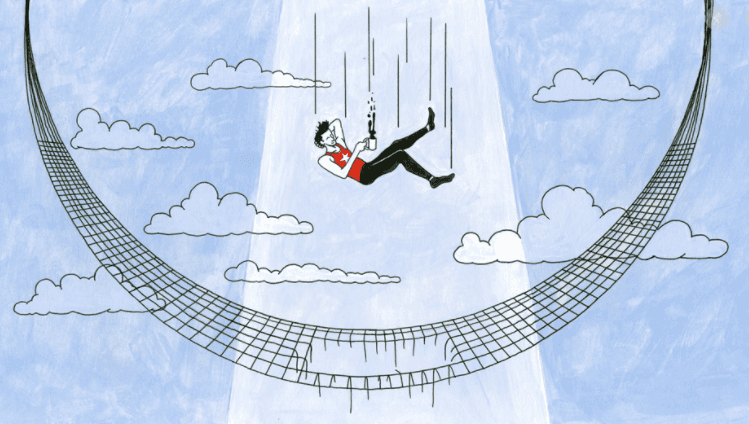
There is no "employer match" for your pension in the creator world. There is no corporate HMO. If you don't build the system, the system will break you.
Traditional employees enjoy invisible benefits: employer-subsidized health insurance, automatic pension contributions, paid sick leave, and annual leave allowances. As a creator, every single benefit must come from your own pocket or they don't exist.
The Feast-and-Famine Cycle
Most creators experience dramatic income swings. You might land three major brand deals in November when brands are spending year-end budgets, then face a drought from January to March when companies are "being careful." Traditional budgeting advice assumes stable income, making it useless for managing these peaks and valleys.
Part 2: The "ENDOW Cascade"—Step Zero of Your Budget
Before you can apply the 50/30/20 rule, you must "clean" your money. Raw revenue from YouTube, Paystack, or TikTok must be filtered. This is the ENDOW Cascade.
1. The Tax & Liability Siphon (25%)
Even if you aren't yet registered as a company with the CAC, you have a future tax liability. Setting aside 25% of every kobo that hits your ENDOW dashboard ensures that when the FIRS or LIRS comes knocking, you aren't scrambling.
Here's why 25% is the right number:
Personal income tax in Lagos ranges from 7% to 24% depending on income bracket
VAT on services is 7.5%
Withholding tax can be 5-10%
Company Income Tax is 30% on profits for registered businesses
The 25% buffer covers accounting fees, tax advisory, and protects against penalties. It's better to have a tax surplus you can invest than to face penalties and stress during tax season.
2. The Business Operating Expense (Opex) (15%)
Being a creator is expensive. You have to fund your own:
Data & Power: Fuel for generators or solar backup systems, plus multiple data subscriptions (₦100,000-300,000 monthly for active creators).
Software Subscriptions: Canva Pro, Adobe Creative Cloud, CapCut Pro, Epidemic Sound, and your ENDOW subscription (₦80,000-150,000 monthly).
Equipment Maintenance: Your iPhone, camera, microphone, and laptop are depreciating. Set aside money monthly for replacements (₦100,000 monthly for creators earning ₦2 million).
Logistics: Uber/Bolt to shoots, brand meetings, and events (₦50,000-80,000 monthly in Lagos).
Collaborations: Video editors, graphic designers, virtual assistants, and photographers you hire.
The 15% allocation is a baseline. As you scale, this might increase to 20-25% if you hire a team or rent studio space.
3. The Owner's Draw (The "Real" Pay)
The money left over after these two steps is your Owner's Draw.
$$Personal\ Income = Gross\ Revenue - (Taxes + Opex)$$
This is the number we apply the 50/30/20 rule to.
A Real Example:
Gross Revenue in November: ₦3,000,000
Tax Siphon (25%): ₦750,000
Business Opex (15%): ₦450,000
Owner's Draw: ₦1,800,000
Now apply 50/30/20 to ₦1,800,000:
Needs (50%): ₦900,000
Wants (30%): ₦540,000
Fortress/Savings (20%): ₦360,000
Part 3: Deep Dive—The 50% "Needs" Bucket
In the Nigerian context, "Needs" go beyond just rent and food.
Housing & The Home Office Subsidy
Rent in cities like Lagos is massive. However, as a creator, your home is likely your set. If 30% of your apartment is used purely for podcasting or content creation, that 30% of your rent can be moved from "Needs" to "Business Opex." This effectively lowers your personal cost of living.
How to calculate:
Total Rent: ₦1,200,000 annually
Business Use: 33% (one bedroom as dedicated studio)
Business Deduction: ₦396,000 annually (₦33,000 monthly)
This ₦33,000 monthly comes from Business Opex, not personal Needs. This is a legitimate business expense that reduces taxable income.
Health Insurance (HMO)
Do not rely on "vibes." As a self-employed person, a medical emergency can wipe out your business. A personal HMO plan (like Reliance or Hygeia) is a non-negotiable "Need."
The Math:
Appendectomy without HMO: ₦800,000-1,500,000
Annual HMO premium: ₦120,000
With HMO, the same surgery: ₦5,000-20,000 co-pay
For a creator with ₦1,800,000 monthly Draw, spending ₦10,000 monthly on HMO is just 1.1% of your Needs budget, a small price for massive peace of mind.
Food and Nutrition
Budget ₦150,000-250,000 monthly for groceries if you're single in Lagos. Proper nutrition is a business investment, your energy and creativity directly impact output.
Data and Connectivity
Split your data costs: "Work Data" comes from Business Opex; "Personal Scrolling" comes from the 50% "Needs" bucket.
Practical split:
Business Line: 100GB monthly (₦20,000) from Opex
Personal Line: 30GB monthly (₦8,000) from Needs
Transportation (Personal)
Separate personal movement from business logistics. Daily commute to the gym, religious services, or visiting family should come from Needs. Budget ₦40,000-60,000 monthly if you don't own a car.
Other Essential Needs
Basic clothing and grooming: ₦30,000-50,000 monthly
Debt obligations: Minimum loan payments are non-negotiable Needs
Utilities: Electricity, water (the personal portion)
Part 4: The 30% "Wants" Bucket—Managing Lifestyle & "Black Tax"
This is where most Nigerian creators lose control. The pressure to "look the part" is intense.
The "Content vs. Consumption" Test
If you buy a designer watch because you want to "flex" in your videos, is it a business expense?
The Answer: If you wear it outside of the shoot, it's a Want.
Framework:
Business Expense (from Opex): Branded clothing with logos worn only for shoots, props that stay in studio
Want (from 30% bucket): Designer items you wear in videos AND to parties, luxury watches that are personal status symbols
Hybrid Approach: Buy items for content, use during campaign period, then sell. The loss is a business expense.
Managing "Black Tax"
In African culture, your success belongs to the family. This is beautiful but heavy.
The Strategy: Treat family support as a fixed line item in your 30% "Wants" bucket. By giving it a limit (e.g., 10% of your Draw), you ensure you're helping without bankrupting your future.
If your Owner's Draw is ₦1,800,000 monthly:
30% Wants = ₦540,000
10% for Black Tax = ₦180,000 monthly
Structure it as:
₦60,000 monthly allowance for parents
₦40,000 for sibling's school fees
₦80,000 reserved for emergency family requests
The Difficult Conversation: Tell your family: "I'm committing ₦180,000 monthly to support the family. Some months I can do more, but this is the baseline you can count on. I need to build my business to support everyone long-term."
Other Wants
Dining out and entertainment: ₦80,000-120,000 monthly
Subscription services (Netflix, DStv, Spotify): ₦20,000-30,000 monthly
Personal fashion purchases: ₦100,000-150,000 monthly
Vacations: Save 2-3 months of Wants budget annually for proper breaks
Part 5: The 20% "Fortress" Bucket—Savings & Investments
This is how you turn a "viral moment" into a "wealthy life."
1. The "Famine Fund" (Emergency Savings)
Standard advice says 3 months. For a creator in a volatile economy, you need 6–9 months of "Needs."
If your Needs are ₦900,000 monthly:
6-month Fund: ₦5,400,000
9-month Fund: ₦8,100,000
At ₦360,000 monthly savings (20% of ₦1.8M Draw), reaching ₦5.4M takes 15 months.
Pro Tip: Keep this in a USD-denominated account or high-yield savings to hedge against Naira devaluation.
Options:
Domiciliary Account: Low interest but protects against devaluation
Stablecoins (USDT/USDC): 5-8% returns but requires crypto knowledge
High-Yield Naira Savings: Platforms like Cowrywise or PiggyVest offer 10-18% but expose you to currency risk
2. Investing for Devaluation
If you earn in Naira but spend on tech (priced in Dollars), you're losing money to inflation. Your 20% should go into:
Global Stocks: Own pieces of the platforms you use (Google, Meta, Amazon).
Use Nigerian platforms like Bamboo or Chaka to buy US stocks with Naira. Budget ₦50,000-100,000 monthly toward global stock investments.
Real Estate: Land in developing areas (Ibeju-Lekki, Epe) as long-term hedge.
Areas near the Lekki Deep Sea Port have seen land appreciate 300-500% over 5-7 years. Start with ₦3-5 million for a plot, but only after your Famine Fund is complete.
3. Retirement Planning
Starting pension contributions in your 20s or 30s means compound interest does the work. Contributing ₦50,000 monthly with 10% annual return gives you approximately ₦113 million in 30 years.
Open a voluntary RSA with any Pension Fund Administrator and contribute monthly from your Fortress bucket.
4. Business Growth Capital
Reinvest in your business:
Professional equipment upgrades
Courses or coaching to improve skills
Hiring specialists (thumbnail designer, editor)
Marketing and promotion
A ₦200,000 editing course might lead to ₦2 million in new clients who value high-quality production.
Part 6: Tooling—How ENDOW Automates Your 50/30/20
Trying to do this math manually is why most creators fail.
Centralized Income Tracking
See YouTube AdSense, Paystack sales, brand deals, and affiliate commissions in one dashboard.
Revenue Tracking and Forecasting
ENDOW shows monthly trends, seasonal patterns, and client concentration risk. This data helps you make strategic decisions about pricing and diversification.
Expense Categorization
Photo receipts and ENDOW categorizes them automatically. At tax time, you have complete records of deductible business expenses.
Goal Setting
Set specific goals and track progress:
"Build ₦5.4M Famine Fund by December 2026"
"Save ₦2M for new camera by June"
"Invest ₦1M in index funds by year-end"

Part 7: Extended FAQ for the Nigerian Creator
"What if I have a very low-income month?"
This is where the Business Buffer comes in. In high-income months (Hills), don't increase your Wants. Keep extra in your business account to pay your Owner's Draw during low-income months (Valleys).
Example: January Revenue: ₦5M. After Tax/Opex, you have ₦3M. Pay yourself your ₦2.5M ceiling, leaving ₦500K in Buffer. Do this for 3 months: ₦1.5M Buffer.
When March brings only ₦1M revenue, add ₦900K from Buffer to maintain your personal Draw.
"Do I need a CAC registration to do this?"
No, but it helps. You can start this system today as a solopreneur. As you grow, transitioning to a Limited Liability Company allows you to take a formal salary, making the 50/30/20 rule easier.
When to Register:
Earning ₦10+ million annually consistently
Hiring employees or regular contractors
Entering significant contracts where liability matters
Want to appear professional to corporate clients
Cost: ₦50,000-150,000 for registration, plus ₦15,000 annually for filing.
"Should I pay myself weekly, bi-weekly, or monthly?"
Most creators find weekly or bi-weekly draws create better spending discipline than one large monthly payment. If your monthly Draw is ₦1,800,000, paying yourself ₦450,000 weekly prevents "feast spending."
"How do I handle foreign clients who pay in Dollars?"
Option 1: Keep Portion in Dollars When you receive $5,000:
Convert 60-70% for immediate Naira needs
Keep 30-40% in domiciliary account as Dollar savings
Option 2: Strategic Conversion Timing Monitor rates and convert during favorable periods.
Tax Consideration: Report all foreign income to FIRS regardless of conversion. Foreign income is taxable for Nigerian residents.
"What if my family emergency exceeds my Black Tax budget?"
Your Black Tax allocation (10% of Wants) covers predictable support. True emergencies can pull from your Wants bucket temporarily. Major emergencies (₦500,000+) may require pulling from Famine Fund but only for genuine life-or-death situations.
Set Boundaries: Not every family "emergency" is actually urgent. A wedding planned months in advance isn't an emergency. School fees that recur annually should be budgeted.
"How do I transition from chaos to this organized system?"
Days 1-30: Awareness Phase Track every kobo in and out. Don't change behavior yet; just observe. Calculate average monthly revenue and expenses.
Days 31-60: Structure Phase Open separate accounts. Start the Cascade with new income. Begin paying yourself an Owner's Draw. Create your first 50/30/20 budget.
Days 61-90: Optimization Phase Adjust percentages based on real spending. Automate transfers. Start building your Famine Fund.
You'll overspend some months. That's okay. The goal isn't perfection; it's progress.
"What happens if I have a viral moment that 10x my income?"
Month 1: Apply the Cascade immediately. Pay yourself your normal Draw ceiling. The excess goes into Business Buffer.
Months 2-6: Maintain normal Draw. Watch if viral success translates to sustained higher revenue. If yes, gradually increase Draw by 20-30%. If no, you have a massive Buffer for the inevitable valley.
The Trap: One ₦10M brand deal doesn't mean you're now a ₦10M/month creator. Don't immediately upgrade lifestyle. Wait for consistency.
"When should I hire a team?"
The Revenue Test: Only hire when consistent monthly revenue can cover the hire at 3x their cost. If an editor costs ₦220,000 monthly, you need ₦660,000 in consistent monthly revenue attributable to what they'll produce.
Start with Freelancers: Before hiring full-time, work with freelancers per-project. A freelance editor at ₦30,000 per video (4 videos monthly = ₦120,000) is cheaper and more flexible than full-time.
When to Go Full-Time: When freelancer costs consistently exceed full-time salary, and you have 6+ months of their salary saved in Business Buffer.
"Should I incorporate my brand or stay sole proprietor?"
Stay Sole Proprietor If:
Earning under ₦5M annually
Working alone with minimal liabilities
Want maximum flexibility
Incorporate as LLC If:
Earning ₦10+ million annually
Hiring employees
Entering contracts where liability protection matters
Seeking business loans or investment
Run the numbers with an accountant, sometimes company structure saves money, sometimes it doesn't.
Conclusion: From Content Creator to Media CEO
The 50/30/20 rule isn't a restriction; it's a roadmap to freedom. You've done the hard part, you've built an audience. Now, use this playbook to make sure that audience builds you a life of security.
The Nigerian creator economy is maturing. The creators who thrive won't necessarily be the ones with the most viral videos. They'll be the ones who treated their craft as a business, their income as a responsibility, and their future as a priority.
You're not just an influencer. You're the CEO of a media company that happens to have your face as the brand. CEOs don't guess where money goes, they track it, allocate it strategically, and make it multiply.
This system of the ENDOW Cascade plus the 50/30/20 framework gives you the financial infrastructure to weather Nigeria's economic volatility, support your family without destroying your future, and build real wealth that outlasts algorithm changes.
Your Next Steps:
Today: Calculate your last three months of revenue and expenses
This Week: Open separate business and personal accounts
This Month: Implement the Cascade on your next income payment
This Quarter: Build your first ₦500,000 of emergency savings
This Year: Reach your 6-month Famine Fund and begin investing
Stop guessing where your money goes.
Start using ENDOW to track every Naira
Related Content