Learn & Grow
Jan 29, 2026
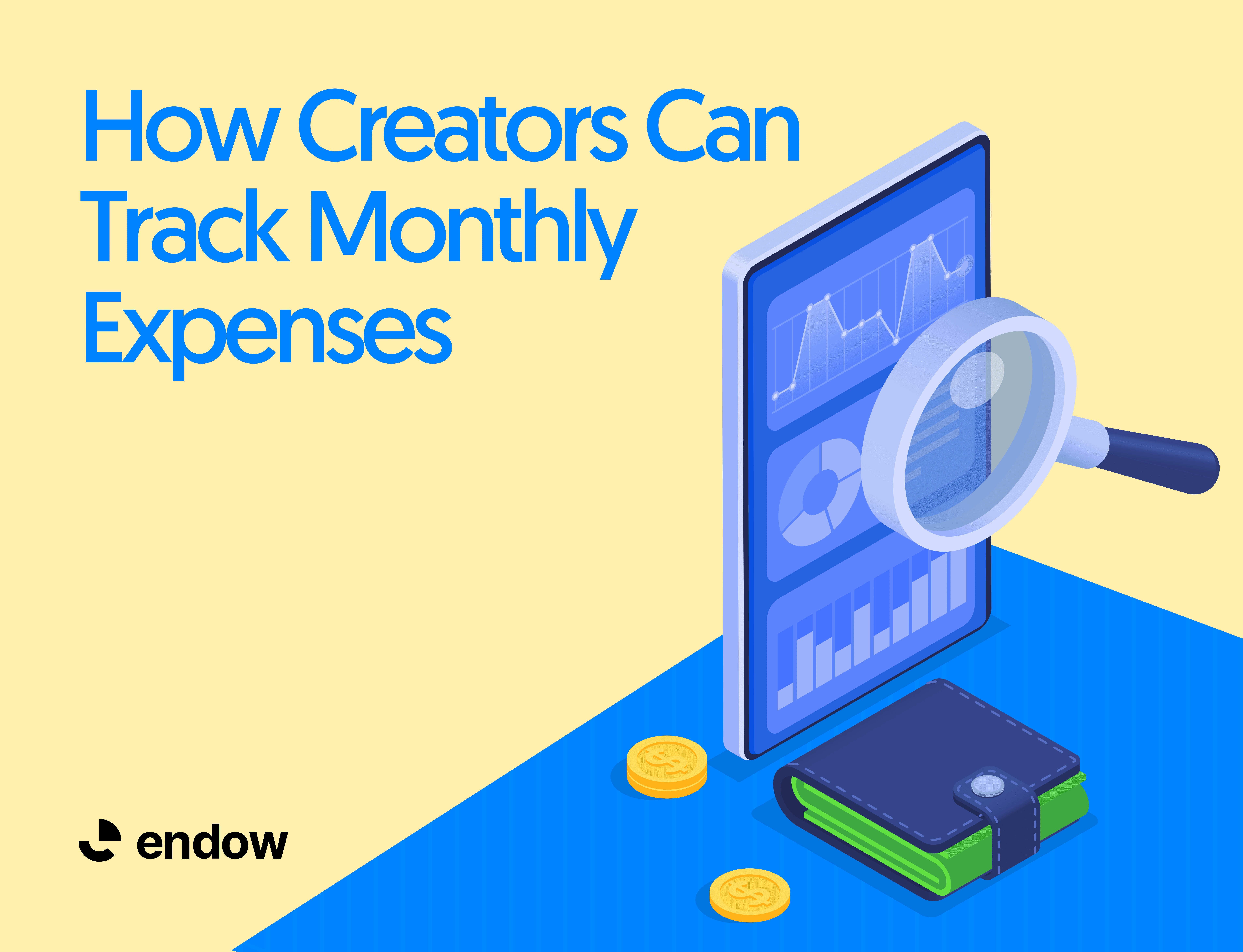
How Creators Can Track Monthly Expenses Without Losing Control
Traditional budgeting advice assumes stable salaries and predictable bills. Creators operate in a different reality. Here is why expense tracking breaks down for creators: Income changes every month Business and personal spending are often mixed Many expenses are small but frequent Some costs are irregular but unavoidable Creators often pay business costs personally There is no employer separating expenses for you
For many creators, income tracking gets all the attention. Expenses quietly cause the real damage.
You know how much you earned last month.
But if you cannot clearly answer how much you spent, what you spent it on, and whether those expenses actually supported your growth, you are running a creative hustle, not a sustainable business.
Expense tracking is not about being stingy.
It is about clarity, survival, and long-term freedom.
Why Expense Tracking Is Harder for Creators
Traditional budgeting advice assumes stable salaries and predictable bills. Creators operate in a different reality.
Here is why expense tracking breaks down for creators:
Income changes every month
Business and personal spending are often mixed
Many expenses are small but frequent
Some costs are irregular but unavoidable
Creators often pay business costs personally
There is no employer separating expenses for you
Without a system, expenses feel invisible until money runs out.
Tracking expenses is not about perfection.
It is about reducing financial blind spots.
What Counts as an Expense for Creators
Before tracking, you need clarity on what you are tracking.
Creator expenses usually fall into four broad categories.
1. Business Operating Expenses
These are costs directly tied to producing, distributing, or monetizing content.
Examples include:
Internet data and Wi-Fi
Power supply, fuel, inverters, generators
Software subscriptions like Canva, Adobe, CapCut, Notion
Hosting, domains, email tools
Payment processing fees
Equipment purchases and repairs
Assistants, editors, designers
Transport to shoots or events
If the expense helps you create, publish, or sell, it belongs here.
2. Mixed Expenses
These are expenses that serve both personal and business purposes.
Common examples:
Mobile data
Rent when part of your home is a workspace
Phone bills
Laptop used for work and personal use
Clothing used for content and daily life
These expenses need to be split, not ignored.
Creators who do not split mixed expenses often overestimate profits and underprice their work.
3. Personal Living Expenses
These are non-negotiable costs that keep you alive and functional.
Examples:
Rent
Food
Transportation
Healthcare and insurance
Family support
Utilities unrelated to work
These should never be confused with business expenses, even when business income pays for them.
4. Growth and Investment Expenses
These expenses are optional but strategic.
Examples:
Courses
Coaching
Conferences
Branding and rebranding
Equipment upgrades
Marketing and ads
Tracking these separately helps you evaluate return on investment instead of treating growth as vague spending.

Why Monthly Tracking Matters More Than Yearly Tracking
Many creators only look at expenses at the end of the year, often for tax purposes. That is too late.
Monthly expense tracking helps you:
spot overspending early
adjust lifestyle before money runs out
identify waste
understand your true cost of operating
price projects realistically
plan for slow months
Creators who track monthly make decisions with data, not anxiety.
Step 1: Separate Business and Personal Money
This is the foundation. Without this step, expense tracking will always feel confusing.
You do not need to be incorporated to separate money.
At minimum:
Use a separate account or wallet for business income
Pay yourself a defined amount as personal income
Run business expenses from business funds where possible
When everything flows through one account, tracking becomes emotional instead of factual.
Endow is built to support this separation by allowing creators to see income streams clearly and distinguish business activity from personal spending.
Step 2: Decide Your Tracking Frequency
Creators often fail because they try to track expenses daily and burn out.
The most sustainable rhythm is:
record expenses as they happen
review weekly
analyze monthly
Consistency matters more than detail.
You are building awareness, not auditing yourself.
Step 3: Choose a Simple Expense Categorization System
Too many categories kill consistency.
A simple creator-friendly structure works best:
Business Expenses
Production
Tools and software
Power and data
Logistics and support
Personal Expenses
Housing
Food
Transport
Health and family
Growth
Education
Marketing
Equipment upgrades
You can refine later. Start simple.
Step 4: Track Every Expense, Even the Small Ones
Small expenses feel harmless. They are not.
Daily data subscriptions, ride hailing, snacks during shoots, impulse purchases add up fast.
Creators often underestimate expenses because:
payments feel small
spending is frequent
cash flow is irregular
Tracking everything shows patterns you cannot see otherwise.
If you consistently ignore small expenses, your monthly totals will never make sense.

Step 5: Split Mixed Expenses Properly
Mixed expenses are where most creators lose accuracy.
Example:
If you spend ₦30,000 on monthly data and use it roughly 60 percent for work, only ₦18,000 is a business expense. The rest is personal.
The same logic applies to:
rent
electricity
phone bills
You do not need to be exact. You need to be reasonable and consistent.
Splitting mixed expenses helps you:
calculate real business costs
avoid overstating profits
price work sustainably
Step 6: Review Monthly Totals, Not Just Individual Expenses
Tracking without reviewing is pointless.
At the end of each month, ask:
How much did I spend in total?
How much went to business versus personal?
What category surprised me?
What can be reduced next month?
Did expenses support my income goals?
This review turns data into decisions.
Step 7: Identify Your Monthly Baseline
Your baseline is the minimum you must spend to operate and live.
This includes:
essential business costs
non-negotiable personal expenses
Once you know your baseline, everything changes.
You stop asking:
“Can I afford this?”
You start asking:
“Does this move me beyond my baseline?”
Creators without baselines panic in slow months.
Creators with baselines plan calmly.
Step 8: Use Expense Tracking to Improve Pricing
Expense tracking is not just about control. It improves income.
When you know:
your monthly operating cost
your personal living cost
your savings goals
You stop underpricing.
You know what a project must cover to be worth accepting.
This is where many creators fail quietly. They accept work that pays, but not enough to sustain their system.
Expense awareness gives you negotiation power.
Step 9: Plan for Irregular Expenses
Not all expenses happen monthly.
Examples:
equipment repairs
annual subscriptions
taxes
travel
family emergencies
Creators should:
list irregular expenses
estimate yearly totals
divide by 12
treat them as monthly obligations
This prevents surprise spending from destroying your budget.
Step 10: Make Expense Tracking Automatic Where Possible
Manual tracking fails under pressure.
Automation helps:
recurring subscriptions
regular transfers
category tagging
monthly summaries
Endow supports this by centralizing creator income and helping you see patterns across months. When expenses are matched against income, planning becomes realistic instead of hopeful.
Common Expense Tracking Mistakes Creators Make
Avoid these traps:
Tracking only when money feels low
Mixing business and personal spending
Ignoring small expenses
Overcomplicating categories
Never reviewing monthly totals
Tracking income but not expenses
Expense tracking is not about control.
It is about awareness.
How Endow Supports Expense Awareness
Endow is not just about receiving money. It is about understanding it.
Creators using Endow can:
see income sources clearly
understand monthly inflows
plan expenses against real numbers
separate business thinking from personal spending
make pricing and savings decisions with confidence
When creators understand where money goes, stress reduces automatically.
👉 See how Endow works
Final Thoughts: Tracking Expenses Is a Creative Survival Skill
You do not need to be perfect with money to be a successful creator.
But you do need visibility.
Expense tracking turns financial anxiety into data.
Data turns confusion into choice.
Creators who last are not always the most talented.
They are the ones who understand their numbers.
Related Content