Learn & Grow
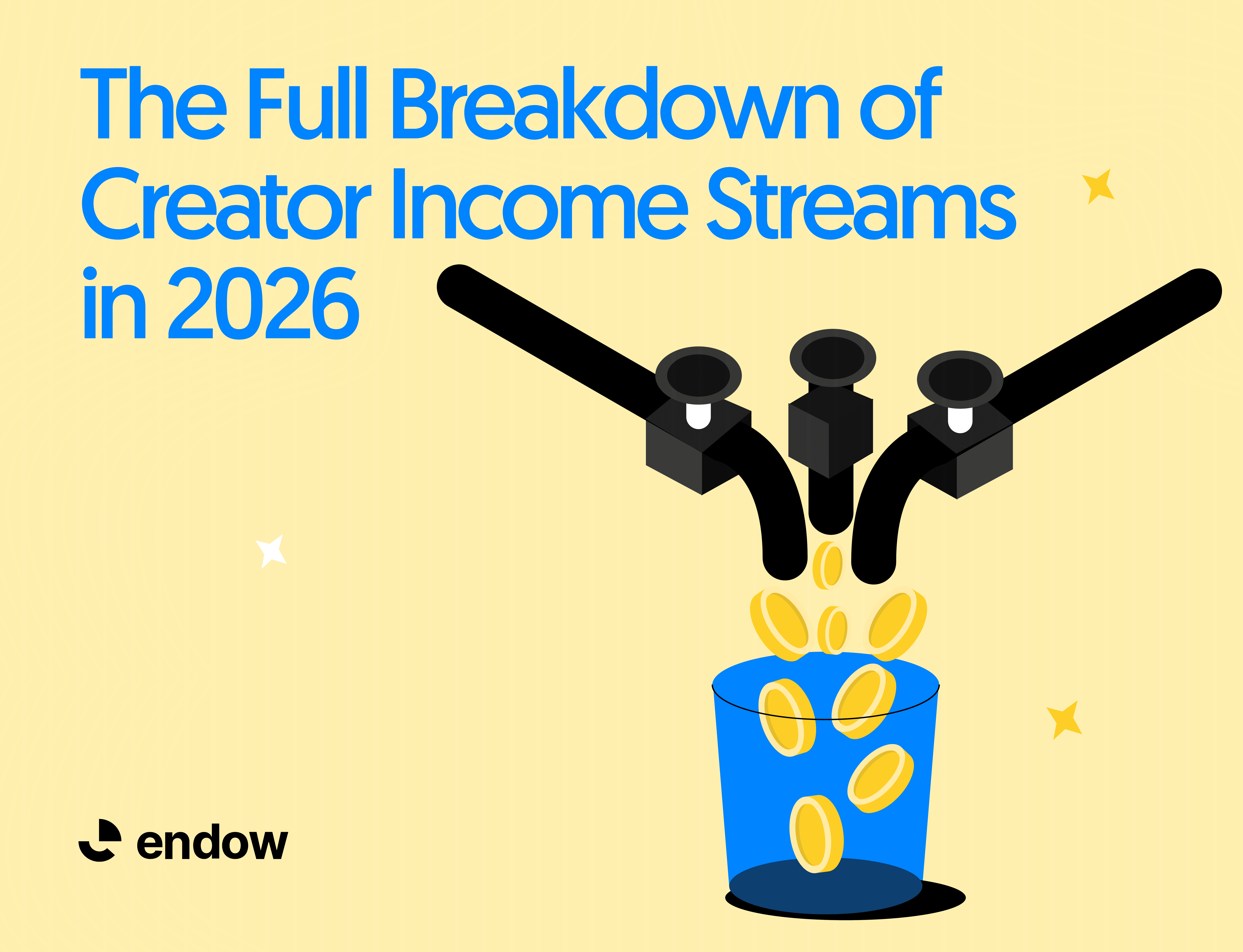
The Full Breakdown of Creator Income Streams in 2026
Discover every major income stream available to digital creators in 2026. Learn how to identify, track, and optimize earnings from platforms, partnerships, products, and more.
One of the biggest hidden problems in the creator economy isn’t earning money. It’s seeing all the money you earn.
In 2026, most creators do not earn a predictable monthly paycheck. Income arrives in fits and starts from multiple sources, spread across platforms and currencies. If you cannot see exactly what you earned and where it came from, you cannot plan, you cannot forecast, and you cannot grow.
Some creators earn $10,000 a month on paper, but after fees, conversion costs, delayed payouts, and taxes, end up with far less.
This is why understanding income streams is not a luxury. It’s a business necessity.
Overview of Creator Income Streams
Here are the major income streams a modern creator can expect in 2026:
Platform Ad Revenue
Brand Partnerships and Sponsorships
Affiliate Marketing
Digital Product Sales
Subscriptions and Memberships
Tips and Fan Support
Licensing and Digital Rights
Speaking and Appearances
Client Services and Freelance Work
Licensing and Syndication
Crowdfunding and Donations
Investments and Equity
Let’s walk through each.
1. Platform Ad Revenue
This is the money many creators think of first.
Platforms like YouTube, Facebook, TikTok, and Rumble share ad revenue with creators. You publish content, ads run, and the platform pays you a portion of what advertisers spent.
How it works
You enable monetization on your channel or profile
The platform tracks views and engagement
Advertisers bid for placements
You receive a payout based on impressions and click-throughs
Why it matters
Ad revenue is passive over time. A video published months ago can earn today.
The challenge
Revenue fluctuates with algorithm changes, seasonality, and advertiser demand. October and November often pay better than January or March.
Real-world tip
Track ad payouts separately in your finance system and never assume the current month’s earnings will repeat. With Endow, you can tag these deposits so you know this income stream’s pattern.
2. Brand Partnerships and Sponsorships
This is the most lucrative and least predictable revenue source for many creators.
Brands pay creators to:
feature their products
create dedicated content
run campaigns or reviews
How deals are priced
Rates depend on:
audience size
engagement rate
niche relevance
quality of content
Deals can be one-off or ongoing.
Payment terms
Brand payments often operate on Net-30 or Net-60 terms, meaning you finish the work but get paid later.
This makes it essential to track outstanding invoices and expected income separately from cleared deposits.
Pitfalls
Many creators fall into:
late payments
unclear deliverables
scope creep
Creators with systems like Endow track deal status from contract to payment, avoiding surprises.
3. Affiliate Marketing
Affiliate income is earned when you recommend a product or service and get paid when your audience buys through your link.
This income is performance-based.
How it works
You share a unique referral link
A follower purchases via your link
The platform or brand pays you a commission
Where it works best
Affiliate income is especially strong in niches like:
tech reviews
beauty and fashion
fitness and wellness
education and software
Pitfalls
Commissions can take 30–90 days to pay, and refunds can reduce earnings. Track affiliate payouts separately and link them back to the content that generated them.
4. Digital Product Sales
Digital products are among the most scalable revenue streams for creators.
Types include:
E-books
Templates
Presets
Online courses
Toolkits
Why it matters
Digital products convert your expertise into income that does not rely on ad views or brand deals.
Challenges
Selling requires:
a checkout system
marketing automation
post-purchase support
Most creators use platforms like Gumroad, Selar, Paystack, or Shopify.
In Endow, you can connect these payouts so product revenue lands in your dashboard and stays visible.
5. Subscriptions and Memberships
This includes recurring payments from platforms like:
Patreon
YouTube Channel Memberships
OnlyFans (non-explicit use cases)
Substack
Discord subscription roles
Why creators love this
Predictable recurring revenue helps smooth out volatility.
Real example
If you have 500 subscribers paying $5/month, that’s $2,500 every month — even when ad revenue dips.
Things to monitor
Membership revenue is sticky, but churn happens. Track retention rates and offer continuous value so members renew.
6. Tips and Fan Support
This income comes from followers directly tipping you.
Platforms include:
Buy Me a Coffee
Ko-fi
Twitch Cheers
TikTok Live gifts
YouTube Super Chats
This income is highly personal and often irregular.
Why it matters
Tips are real income that shows genuine engagement. They may not be huge, but they add up.
Creators should treat this as recurring earnings if tips appear consistently, or as ad hoc revenue if not.
7. Licensing and Digital Rights
Creators with reusable assets—music, photos, videos—can license them to other businesses or media.
This is especially common for:
photographers
musicians
stock footage creators
instrumentals and beats
How it works
Platforms like Getty Images, Adobe Stock, and music libraries pay royalties when content is used.
Licensing turns one piece of work into multiple income events.
8. Speaking, Workshops, and Appearances
Many creators monetize influence by getting paid to:
speak at events
run workshops
host corporate training
appear on podcasts or panels
This income is one-off but high value.
Tips
Track these separately and budget for travel, prep time, and reporting outcomes to sponsors.
9. Client Services and Freelance Work
Some creators offer:
content strategy
social media management
video editing
ghostwriting
consulting
This is traditional service revenue, but tied to your creator brand.
Benefits
It can be stable and predictable if you secure retainers.
Risks
It can distract from your own content if not time-boxed.
Keep service income separate in your finance system to evaluate profitability.
10. Crowdfunding and Grants
Platforms like:
Kickstarter
Indiegogo
Grant programs from industry bodies
These pay creators for project-based work or product launches.
Crowdfunding often funds a specific initiative, so budget it as project income, not recurring revenue.
11. Investments and Equity
Some creators earn money from:
advertising revenue shares
equity in startups they advise
revenue-sharing partnerships
This is passive or semi-passive and often irregular, but it counts as real income when it lands.
Track equity distributions or returns as separate streams so you know what part of your wealth is investment-based vs creator-based.
How to Categorize and Track All These Streams
Knowing where money comes from is just the first step. You need to see it clearly in your financial system.
Here’s how to organize it:
1. Tag by Source
Each income stream should have a unique tag:
YouTube ads
TikTok creator fund
Brand deals
Affiliate A
Affiliate B
Patreon
Product sales
Workshop fees
Service revenue
This makes analysis and forecasting far easier.
2. Track Timing
Distinguish:
Earned date (when service was delivered or content published)
Expected payout date
Received date
This prevents blind spots when money is delayed.
3. Separate by Currency
If you earn in USD, EUR, or NGN, track each independently before conversion. This lets you plan conversions intentionally, not emotionally.
4. Connect to Financial Tools
Endow pulls revenue from multiple sources into one dashboard so:
you see total inflows
you categorize with tags
you allocate money to taxes and buffers
you generate clean reports for planning and taxes
How Smart Creators Structure Income for Stability
Here is a typical structure that helps creators avoid feast-or-famine:
Step 1: Centralize Income
All income lands in a single hub or wallet where it is automatically categorized.
Step 2: Set Aside Obligations
Allocate portions to taxes, operational costs, and business buffers before spending.
Step 3: Pay Yourself a Fixed Amount
Rather than spending everything that arrives, take a steady draw that supports your lifestyle and planning.
Step 4: Reinvest the Rest
Use surplus for content upgrades, collaborations, and growth.
Common Mistakes Creators Make with Income Streams
Mistake 1: Treating All Money as Personal
If you don’t separate income by source and purpose, you confuse growth with consumption.
Mistake 2: Not Forecasting
Creators often plan based on last month’s income, not patterns. Income forecast must be data-driven.
Mistake 3: Ignoring Slow Periods
Without buffers, creators panic and sell their time for lower rates.
Planning for the Future of Creator Income
In 2026 and beyond:
Revenue will become more diversified
Platforms will offer richer monetization tools
Creators will demand better financial infrastructure
Creators who understand their revenue streams early stay ahead of the curve.
Final Thoughts
In the creator economy, income is not a paycheck. Income is a system of streams flowing in, out, and across platforms, clients, and products.
Understanding every source helps you:
Predict cash flow
Negotiate from strength
Plan taxes and investments
Grow without burning out
Endow exists to make this clarity simple. When you see where every dollar comes from, you make decisions that grow your income instead of reacting to it.
Connect all your revenue streams with Endow Now!
Related Content