Create Smarter
Mar 17, 2026
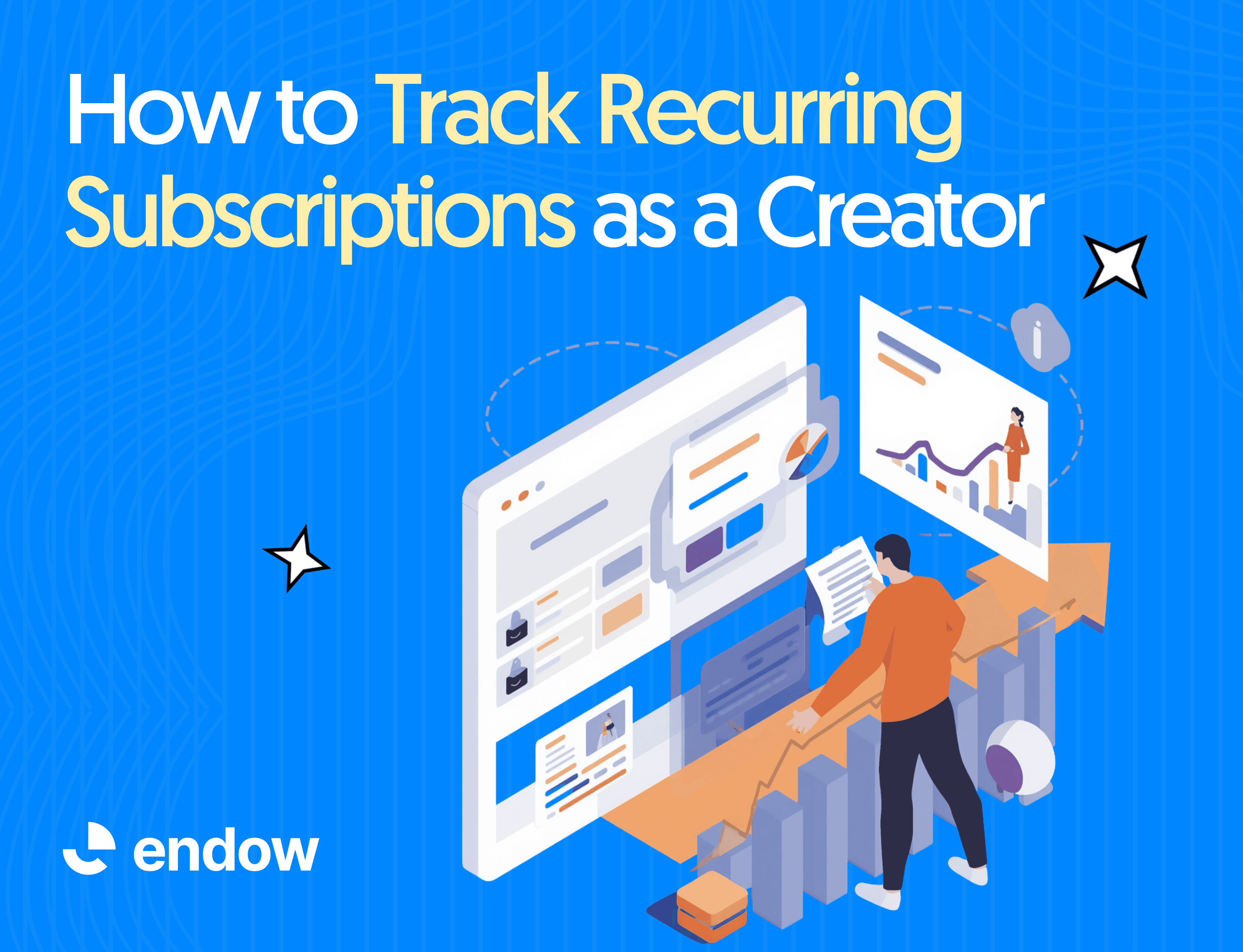
How to Track Recurring Subscriptions as a Creator
Recurring subscriptions can quietly drain your income if you are not tracking them properly. This guide explains how creators can gain full visibility into their subscription costs and take control of their finances.
There is a version of your income you see.
And there is a version you don’t.
The visible version is what hits your account:
A brand deal payment
A course sale
A client invoice
The invisible version is what leaves your account quietly:
Monthly software renewals
Annual subscriptions you forgot about
Tools you no longer use but still pay for
Most creators focus on growing the first.
Very few pay attention to the second.
But over time, it is the second that quietly shapes your profitability.
Not dramatically. Not all at once.
But consistently.
This is what makes recurring subscriptions dangerous.
They don’t feel like a problem.
Until they are.
The Real Issue Is Not Subscriptions. It Is Visibility.
Creators rarely struggle because subscriptions are too expensive.
They struggle because subscriptions are invisible in context.
You may know you pay for:
Canva
CapCut
Google Drive
Notion
An email platform
But you likely do not know:
The total monthly cost across all tools
The annual cost when converted properly
Which ones are actually tied to revenue
Which ones are just sitting in the background
And without that clarity, you are making decisions in the dark.
That is the real problem.
The Nature of Subscription Creep in the Creator Economy
Subscriptions do not enter your business all at once.
They accumulate.
You start with one or two tools. Then your workflow expands.
You try something new.
You upgrade.
You test another platform.
You forget to cancel something.
You sign up for a free trial that converts.
And slowly, your stack grows.
Not intentionally.
Just gradually.
At some point, you are paying for:
Multiple tools that solve the same problem
Tools you only use occasionally
Tools you have completely forgotten
This is what can be called subscription creep.
It is not a spending decision.
It is a lack of structure.
Why Subscriptions Feel Smaller Than They Are
There is a psychological reason creators underestimate subscriptions.
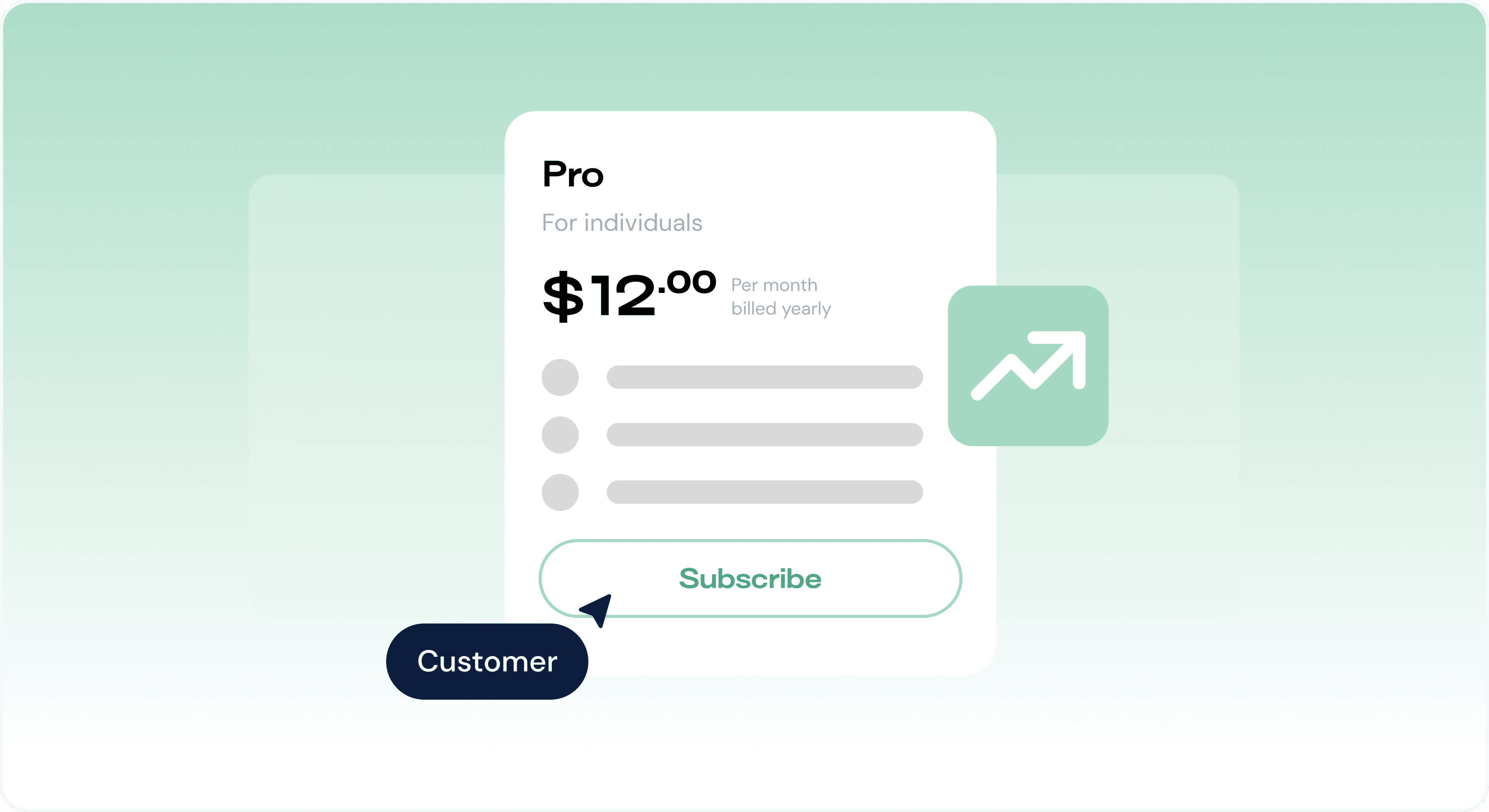
A one-time ₦150,000 purchase feels heavy.
A ₦7,500 monthly charge feels manageable.
But ₦7,500 monthly is:
👉 ₦90,000 per year
Multiply that across 10 tools:
👉 ₦900,000 annually
That is not small.
That is operational cost.
And most creators never calculate it that way.
The Difference Between a Tool Stack and a Cost Structure
Most creators think they have a “tool stack.”
What they actually have is a cost structure they have not defined.
A tool stack is about what you use.
A cost structure is about:
What it costs you to operate
What those costs add up to
How those costs relate to your income
Without defining that, your subscriptions exist in isolation.
And isolated costs are easy to ignore.
The Real Work: Turning Subscriptions Into Data
Tracking subscriptions is not about listing tools.
It is about turning them into something measurable.
When subscriptions are just names, they are harmless.
When they become numbers, patterns emerge.
You start to see:
Clusters of similar tools
High-cost categories
Redundant spending
Underused services
This is where control begins.
Monthly vs Annual: Where Most Creators Lose Control
One of the biggest blind spots in subscription tracking is billing cycles.
Monthly subscriptions are visible.
Annual subscriptions are not.
Because they disappear between renewals.
You pay once.
Then forget for 12 months.
Until the next charge hits.
And when it does, it feels like:
👉 A surprise expense
Even though it was predictable.
This creates two problems:
You don’t budget for it
You don’t evaluate whether it is still worth it
Annual subscriptions require a different kind of awareness.
They need to be remembered before they happen, not after.

The Currency Problem Most Creators Ignore
Many creators operate across currencies.
You may earn in naira.
But pay for tools in dollars.
At first, it seems manageable.
But over time:
Exchange rates fluctuate
Subscription costs increase without warning
Your real expenses shift
A $10 subscription is not always the same ₦ value.
And if you are not tracking this properly:
👉 Your cost structure becomes unstable
This is one of the least discussed issues in creator finances.
But it matters.
Because your expenses are no longer fixed.
They are dynamic.
The Illusion of “Useful Tools”
Not every useful tool is a necessary expense.
This is where creators often get stuck.
You might say:
“I use this sometimes”
“It’s helpful when I need it”
“I might need it later”
But that is not a financial decision.
That is a comfort decision.
The real question is:
👉 “Is this tool earning its place in my system?”
If a tool does not:
Save significant time
Improve output meaningfully
Contribute to revenue
Then it is not neutral.
It is a cost.
The Hidden Link Between Subscriptions and Pricing
This is where things get deeper.
Your subscription costs directly affect your pricing.
If you are spending:
₦200,000 to ₦500,000 monthly on tools
That cost must be covered by your work.
If it is not:
👉 You are underpricing without realizing it
Many creators feel:
Overworked
Underpaid
Stretched
But cannot explain why.
Often, the answer sits quietly in their subscriptions.
Subscriptions and Mental Load
There is another cost most creators don’t consider.
Cognitive load.
Every subscription adds:
Another payment to track
Another renewal to remember
Another tool to manage
Individually, this is small.
But collectively, it creates noise.
And that noise affects:
Focus
Decision-making
Financial clarity
Tracking subscriptions properly is not just about money.
It is about reducing mental friction.
What Changes When You Start Tracking Properly
When subscriptions move from invisible to visible, something shifts.
You stop reacting.
You start evaluating.
Instead of:
👉 “Why is money leaving my account?”
You ask:
👉 “Is this expense justified?”
That is a completely different position.
It gives you control.
The Role of Systems in Subscription Tracking
At a certain point, manual tracking stops working.
Not because it is wrong.
But because it does not scale.
As your creator business grows:
More tools
More transactions
More complexity
You need something that:
Sees everything at once
Organizes it automatically
Keeps it updated
This is where systems become necessary.
Where Endow Fits Into This
Endow is built around visibility.
Not just tracking money.
But understanding it.
In the context of subscriptions, that means:
Identifying recurring charges automatically
Categorizing spending patterns
Showing how subscriptions fit into your overall finances
Giving you a clearer picture of your operational costs
Instead of guessing:
👉 You see the pattern
Instead of reacting:
👉 You anticipate
That is the difference.
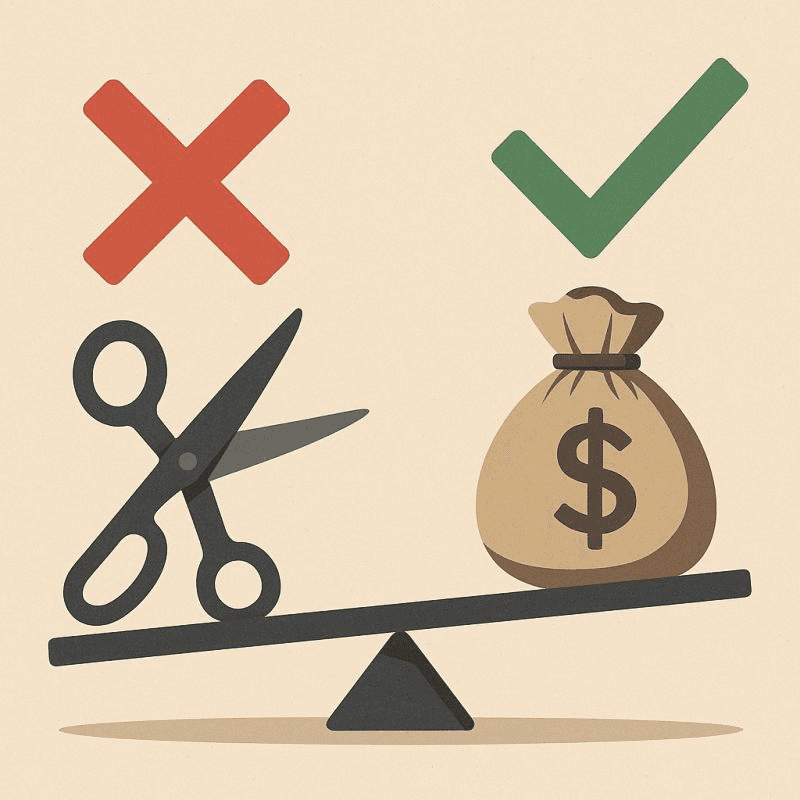
The Real Goal Is Not Cutting Costs
Many creators approach subscriptions with one mindset:
👉 “How do I reduce expenses?”
That is incomplete.
The real goal is:
👉 “How do I make my spending intentional?”
Some subscriptions are worth every naira.
They:
Save hours
Improve quality
Enable income
Others are not.
The point is not to remove everything.
It is to understand everything.
The Relationship Between Subscriptions and Growth
As you grow, your subscription costs will likely increase.
That is normal.
More tools.
More capabilities.
More scale.
But growth without awareness creates risk.
If your expenses grow faster than your income:
👉 You feel stuck, even while earning more
Tracking subscriptions ensures:
👉 Growth remains profitable
The Quiet Danger of “Set and Forget”
Subscriptions are designed to be forgotten.
That is their model.
They rely on:
Automation
Continuity
Low friction
This benefits the company.
Not always the creator.
“Set and forget” works for convenience.
But it works against awareness.
And in finance:
👉 Awareness is everything
The Long-Term Impact of Not Tracking
If you ignore subscriptions long enough:
Costs accumulate
Profit margins shrink
Financial clarity disappears
Not suddenly.
But steadily.
And because the change is gradual:
👉 You may not notice until it is significant
What Financially Stable Creators Do Differently
They do not eliminate subscriptions.
They understand them.
They:
Know their total monthly and annual cost
Recognize which tools matter
Remove what no longer serves them
Adjust as their business evolves
They treat subscriptions as part of their system.
Not background noise.
Final Perspective
Tracking recurring subscriptions is not about being strict.
It is about being aware.
Because money rarely disappears dramatically.
It leaks.
Quietly.
Repeatedly.
Over time.
And the creators who last are not the ones who avoid spending.
They are the ones who:
👉 Understand exactly where their money is going
Stop letting small charges quietly reduce your profit.
Use Endow to track recurring subscriptions, understand your spending patterns, and manage your finances with full visibility in one place.
Related Content